
Allies under fire
Hermer accuses states of making previously unimaginable threats

Some of the UK’s long-standing allies “seem to almost revel in thumbing their noses at previously accepted international norms”, the attorney general of England and Wales said yesterday. In remarks that appeared to be directed at the United States among other major countries, Lord Hermer KC accused them of “undermining key alliances and in making threats that would not so long ago have appeared unimaginable”. Reading international news often felt like an exercise in cognitive dissonance, he added.
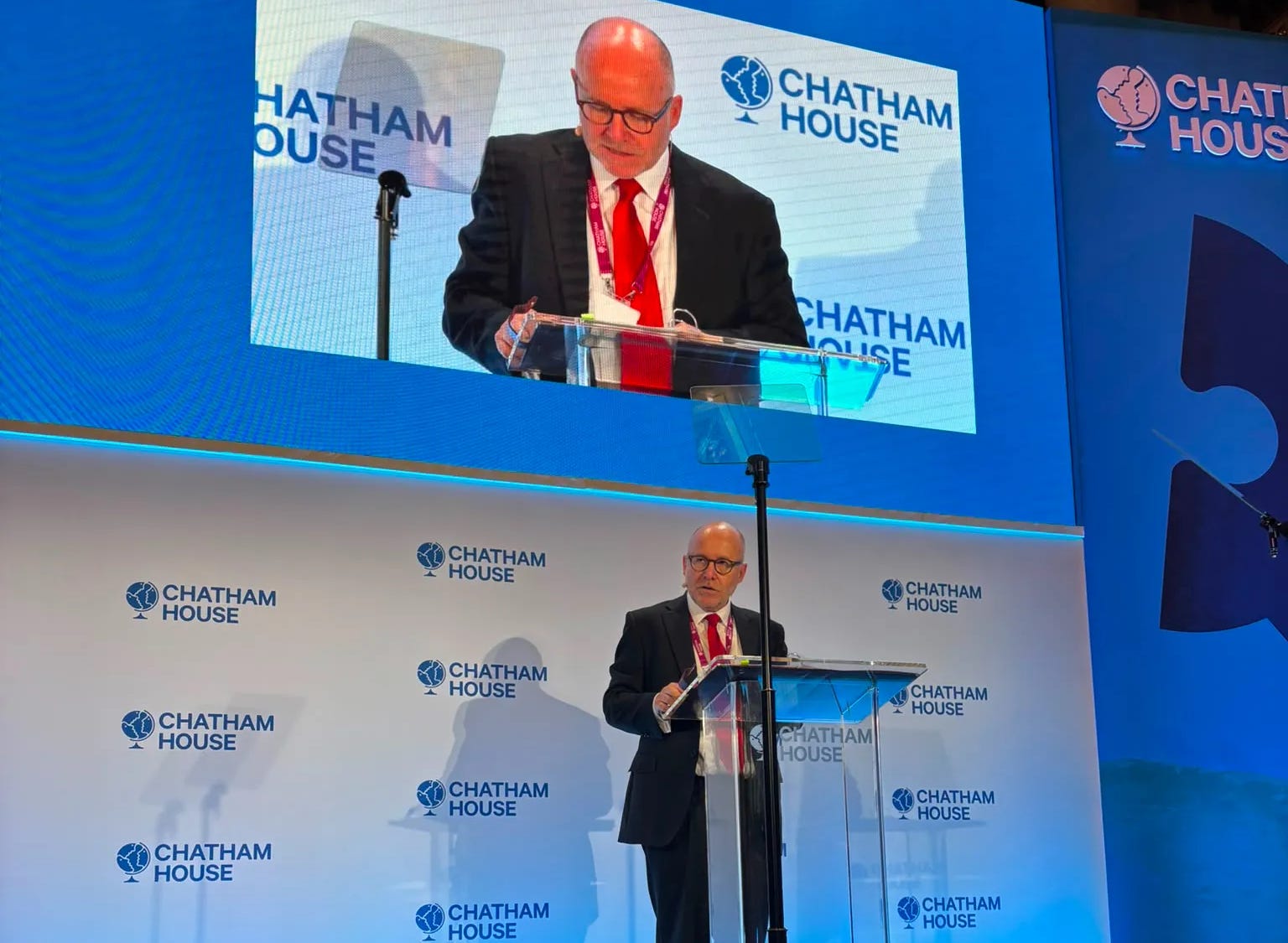
Addressing an international conference arranged in London by the policy institute Chatham House, Hermer said this stance was dangerous for the very idea of a rules-based order — and dangerous for the world.
It had real-life consequences. Tens of thousands of civilians had been killed in various conflicts. We saw “human misery” in Ukraine because a permanent member of the UN Security Council had committed the international crime of aggression.
This “marked change in the geopolitical context” also had indirect impacts. Blocked shipping lanes meant that those most in need of food could not obtain fertilisers for their crops. The cost-of-living crisis was made even worse by spiralling energy prices.
And yet the international rules-based order had never been needed more. “Whether we are talking climate, AI or pandemics,” Hermer said, “a successful response can only be fashioned at the international level through cooperation and agreement.” Pretending we could get off the world as it spins ever faster was as short-sighted as it was foolhardy.
Not that long ago, he continued, so-called realist commentators were arguing that the rules-based order and international law belonged to a different, gentler age that had now passed into history. But it was surely now clear that the successful response to these challenges was not to be found in the theory that might is right.
No one could argue that Russia was in a better position — economically, militarily or diplomatically — than it had been five years ago. No one could argue that the major protagonists in the current Gulf conflict had emerged stronger, richer or with their global reputations enhanced.
In Hermer’s view, “the vast majority of countries in the world believe in and support international law and recognise the importance of international cooperation in addressing the great global challenges of our time”. But those who supported international law needed to help people understand how it could benefit them in their everyday lives.
Far from bypassing the United Nations, as others had suggested, coalitions of the willing needed to be underpinned by the norms and values in the UN Charter and the Universal Declaration of Human Rights.
The attorney general called for a “principled middle way between the dangerous notion that might is right and the pretence that we can just revert to the status quo”.
That, he concluded, was an idea worth fighting for.