
Article 8 reforms planned
And states that refuse to take back migrants will face sanctions

The home secretary is expected to outline reforms to the way article 8 of the human rights convention is interpreted by courts and tribunals today. Article 8, which protects the right to private and family life, has been relied on by migrants in challenging their removal from the United Kingdom.
Today’s Times reports that “family” will be defined as immediate family — such as a parent or child — and “family rights accrued after migrants are ordered to leave the UK” will no longer count.
“The legislation will also ensure that once someone has been asked to leave the country, appeals will not be allowed to take into account familial connections made after that point,” the Financial Times explains. “This will apply even if an asylum seeker has a child in the period between the rejection of their application and the launching of an appeal.”
According to the Telegraph, “illegal migrants will be restricted by law to only one appeal against their removal, rather than ‘endless’ appeals where they cite different reasons at different times to remain in Britain”. The paper says that “appeals will be decided by a Danish-style independent board of adjudicators with powers to identify and weed out unfounded cases”.
Writing in the Guardian today, Mahmood says:
More than 100,000 people now live in asylum accommodation, funded by the taxpayer. Unless we act, we risk losing popular consent for having an asylum system at all. In a country that is seeing division stirred up on our streets, we will not bring unity unless we restore order to our borders.
For that reason, I have today set out the most significant and comprehensive changes to our asylum system in a generation…
My goal is to ensure there are legal routes into this country for those who are truly fleeing peril and for whom this is the first safe country they have encountered.
As we restore control to our borders, I will therefore open new, capped, safe and legal routes for genuine refugees. While these will be modest at first, they will grow in time.
Crucially, they will make community sponsorship the norm for the resettlement of refugees. Community and voluntary organisations will be able to sponsor refugees to come to the UK and support them when they arrive. This will ensure that communities that have the capacity and desire to accept refugees will be able to do so. As the Homes for Ukraine scheme shows, the British people’s capacity for this generosity is deep.
At the same time, we will open new legal routes for students and those in work. We will ensure war doesn’t cut short their chances in life and we will welcome those here who can contribute to our national life. While refugee status for those who come here will be temporary, those who come via legal routes will have a faster and easier path to becoming permanent citizens.
Sanctions
The Times also reports that countries which refuse to take back illegal migrants will face “Trump-style visa sanctions”.
Angola, Namibia and the Democratic Republic of Congo have, collectively, refused to take back more than 4,000 illegal migrants and foreign criminals from the UK. It’s reported that the UK will bar the entry of people from these countries unless their governments rapidly improve co-operation on removals.
Home Office sources told The Times that the three countries would have a month to start co-operating before a sliding scale of sanctions was imposed. “Mahmood formally issued the threat of visa bans on Thursday by writing to the countries’ embassies in London” the newspaper reported.
If the three countries refused to co-operate, diplomats and VIPs would first lose priority access to the UK visa system, even for tourist visits. Without privileged or fast-tracked visa access, they would have to queue outside embassies like everyone else. More serious penalties would follow, ending with a ban on all citizens gaining visas to come to the UK.
“India, Pakistan, Nigeria, Bangladesh, Somalia and Gabon are believed to be the other countries most resistant to taking back illegal migrants and could join the list over the coming year,” The Times added.
Refugee convention
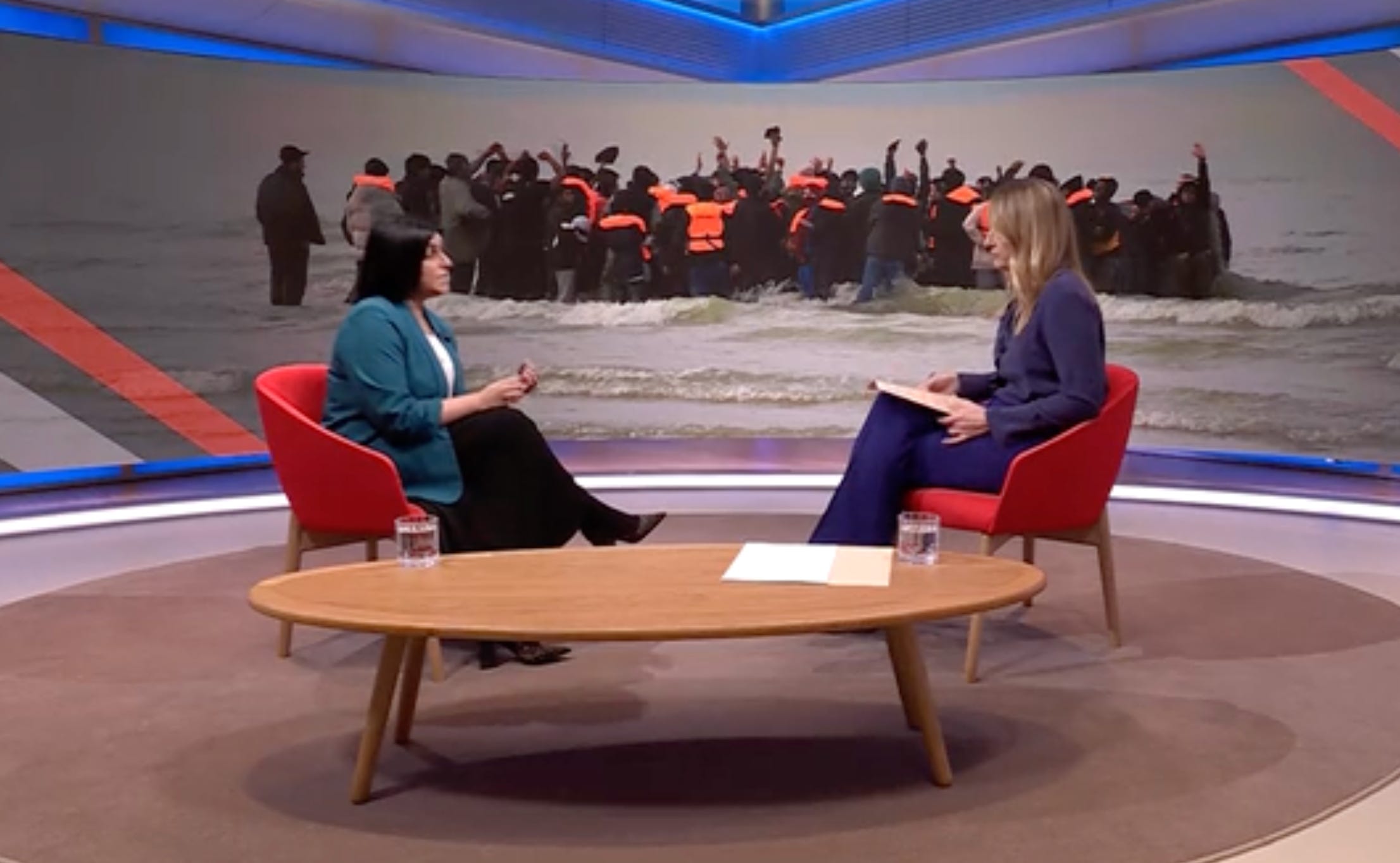
Listening to Mahmood and the shadow home secretary Chris Philp being interviewed about refugees by the BBC’s Laura Kuenssberg yesterday, I was surprised that nobody mentioned the main impediment to refusing asylum.
The United Nations refugee convention of 1951, extended in 1967, gives important rights to people who have a well-founded fear of persecution. In particular, refugees must not be sent back to a country where they face serious threats to their life or freedom.
That was presumably why Mahmood seemed to be saying that asylum seekers would not be returned —in a process known as refoulement —unless and until they were no longer at risk. They would have to wait up to 20 years before being granted permission to stay in the United Kingdom but their claims would be reviewed every 30 months.
Philp, by contrast, completely ignored the refugee convention. Instead, he repeated that migrants would be deported “within a week” once the UK left the European convention on human rights.
What he didn’t explain was that a future government would have to give the Council of Europe six months’ notice of its intention to “denounce” the European convention. Any attempt to ignore that requirement would make it very difficult for the UK to remain in 46-member body — something that the Conservatives, at least, would apparently seek to do.
And although treaty-making is a prerogative power it seems unlikely that Conservative/Reform coalition— if that is what we are to have after the next general election — would seek to wiuthdraw from the convention without the backing of parliament. But the necessary primary legislation would take a year or more to agree, draft and pass. So it would be 18 months before a new government could begin sending illegal migrants back, plus the time it would take our overburdened courts to deal with challenges from those who asserted a well-founded fear of persecution.
Readers may remember Yvette Cooper’s white paper in May — the one in which, as I observed at the time — Home Office officials seemed to have confused the Human Rights Act (domestic legislation) with the human rights convention (an international treaty). Mahmood’s proposals go much further. But I prefer to reserve judgment until we see exactly what legislative changes the government is proposing.
Article 3
Another Home Office concern is how the courts interpret article 3 of the convention, which says “no one shall be subjected to torture or to inhuman or degrading treatment or punishment”.
On this, the UK will reportedly join other Council of Europe states who have followed the Danish prime minister in arguing that rulings from the human rights court have limited their ability to deport illegal migrants.
In the meantime, it will be interesting to see whether Mahmood goes to Strasbourg at the beginning of next month, when the Council of Europe’s committee of ministers will be discussing human rights. These regular meetings are normally attended only by diplomats assessing compliance with past rulings. The next meeting is shaping up to have a much greater impact on the future.
An insightful post by Joshua - as ever - for he rightly focuses on the 1951 Refugee Convention, often disregarded in the migration debate. A little out of date is my 9 March 2023 attempt to piece together some bits of our migration history - any comments, omissions or corrections will be appreciated. https://stephentwist.wordpress.com/2023/03/09/migration-asylum-designated-places-and-extradition/