
Assisted dying revived?
Not easy without government support

What chance do supporters of assisted dying have of reviving the Terminally Ill Adults (End of Life) Bill in the new session of parliament starting this week? Their bill lapsed when parliament was prorogued at the end of last month. But could they now use the Parliament Act 1911 to bypass the House of Lords?
Perhaps — but the Hansard Society, an independent political research group that promotes knowledge and understanding of parliamentary democracy, explains the difficulties in an authoritative new briefing.
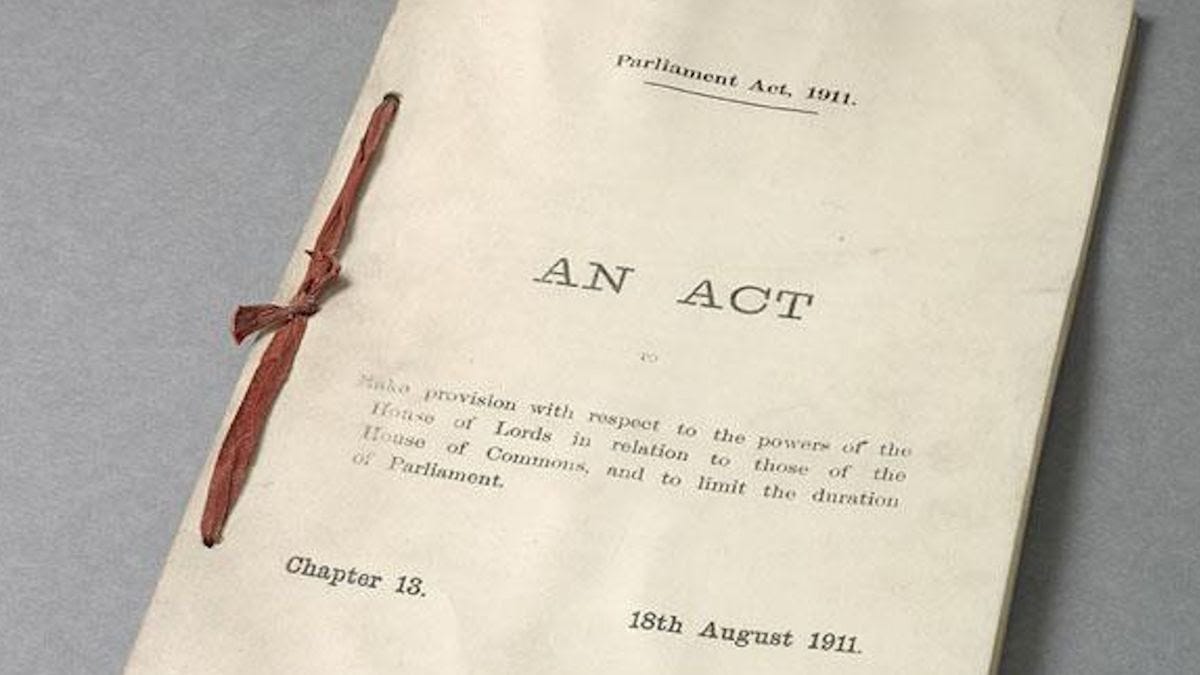
The Parliament Act allows the House of Commons, in limited circumstances, to make law without the consent of the House of Lords. But the procedure has been used successfully only seven times over the past 115 years and never for a private member’s bill. Using it for the assisted dying bill won’t be easy without government support.
Whose bill is it anyway?
Any MP who is not a minister can introduce a private member’s bill in the House of Commons. But the only MPs whose bills stand any chance of becoming law in this session are those who come high in a ballot to be held on 21 May. That gives them the first slot on one of seven Fridays reserved for introducing private members’ bills.
MPs don’t have to decide before the ballot which reforms they want to bring in. Those drawn in the top 20 — whose bills take precedence over all other private member’s bills — will find themselves besieged by campaigners waving draft bills. And MPs on the government side can curry favour with ministers — while taking credit for introducing an act of parliament — by picking up a government-supported bill that has not found a slot in the legislative timetable.
It’s by no means certain that any of the top seven MPs — who are guaranteed a chance to address the Commons during a debate on a bill of their choice — will want to take on the opponents of assisted dying. On the other hand, those backbenchers who come high in the ballot may not want a fight with the bill’s many supporters.
What next?
Let’s assume that one of magnificent seven decides to give it a go. For the system to work, the bill introduced by that MP must be “identical” to the one passed by the House of Commons on 20 June last year and sent to the Lords — although minor technical changes may be allowed as well as some amendments agreed by both houses.
The new private member’s bill must be passed by the Commons and sent to the Lords at least a month before the next session of parliament ends — expected to be around this time next year.
For the Parliament Act to be invoked, the Lords must again “reject” the bill. This includes refusing to support it after a second or third reading debate; the bill failing to complete all its stages before the end of the session; and peers insisting on amendments that are unacceptable to MPs.
It’s always possible that the bill’s opponents in the House of Lords will back down and allow the legislation to be passed in the normal way. But if and when it becomes clear that the House of Lords will not do so, the speaker of the House of Commons will certify that the statutory conditions for use of the Parliament Act have been satisfied. After that, the bill will become law.
This would happen immediately after a defeat at second or third reading. If the bill has still not been passed on the penultimate day of the parliamentary session, that would be the point at which rejection is deemed to have taken place — allowing royal assent to be given before prorogation.
Problems
All this assumes a measure of government support. The Hansard Society paper says:
If MPs give an identical assisted dying bill a second reading in the 2026–27 session, that will signal the Commons’ intention to proceed, if necessary, under the Parliament Act.
However, a backbench MP sponsoring the bill does not control parliamentary time and cannot table the procedural motions needed to carry the bill through its remaining stages. Without government support — either by allocating time or tabling the necessary motions — the Commons’ expressed intention may ultimately be incapable of being realised.
The government would arguably therefore have a constitutional responsibility to facilitate the House of Commons’ decision by providing the time and procedural motions necessary to give effect to it. A failure to do so could be seen as frustrating, through inaction, the Commons’ exercise of its constitutional primacy through the mechanism provided by the Parliament Act.
Wouldn’t that compromise the government’s current position of studied neutrality? Not necessarily, argues the Hansard Society: “it would be facilitating the statutory right of the elected house to determine whether to insist upon legislation it has previously approved, rather than endorsing the policy of assisted dying itself”.
Comment
I’m not so sure. Parliamentary government does not generally work on the basis that ministers ask MPs for their opinions and then legislate to give them effect. If the government were to provide the support needed for the bill to get through parliament, ministers would be seen as “owning” the bill. And if they own the bill then they are under a duty to make it as effective as possible. Indeed, they are arguably under an obligation to ensure that all legislation passed by parliament can be made to work.
Perhaps the government thinks that the bill’s sponsors have devised a series of proposals that are incapable of improvement. In that case, ministers should say so. More likely, the parliamentary processes have exposed gaps and flaws that need to be dealt with.
According to the Hansard Society, the bill’s progenitor Lord Falconer of Thoroton “tabled 74 amendments during committee stage in the House of Lords (of which only three were agreed), some of them aimed at making the bill workable in practice.”
These issues should now be resolved by ministers. The measure should then be reintroduced as a government bill and debated in the normal way. As was the case with bills such as the War Crimes Act 1991, the Hunting Act 2004 and the Marriage (Same Sex Couples) Act 2013, MPs should be given an entirely free vote.
In reality, the success of this bill is already in the government’s hands. Its operative provisions will not take effect until ministers say so. Clause 58 gives them no more than four years to make the necessary regulations but it seems to me that clause 53 would allow a secretary of state to get round that requirement.
The policy behind this bill is a matter for parliament. But interpreting this legislation, once passed, is something the judges will have to deal with. That’s why the bill’s drafting should have been considered by an independent body — such as the Law Commission — before being debated by legislators.
If MPs have to fall back on the Parliament Act, the backbench MP who takes this bill through the House of Commons will be prevented from amending and clarifying it because of legislation that has never before been used in these circumstances. And that is no way to make good law.