
Blasphemy appeal
High Court to consider overturning Koran-burner's acquittal

An asylum seeker cleared of a public order offence after setting fire to a copy of the Koran while standing near the Turkish consulate in London may have his acquittal overturned after a hearing next week.
The director of public prosecutions will appeal to the High Court on Tuesday against a decision by the crown court last October allowing an appeal against conviction by Hamit Coskun, who had been found guilty by a district judge at Westminster Magistrates’ Court of an offence under the Public Order Act 1986. Mr Justice Bennathan, sitting with two lay magistrates, gave a detailed judgment explaining why the magistrates’ court had got it wrong.
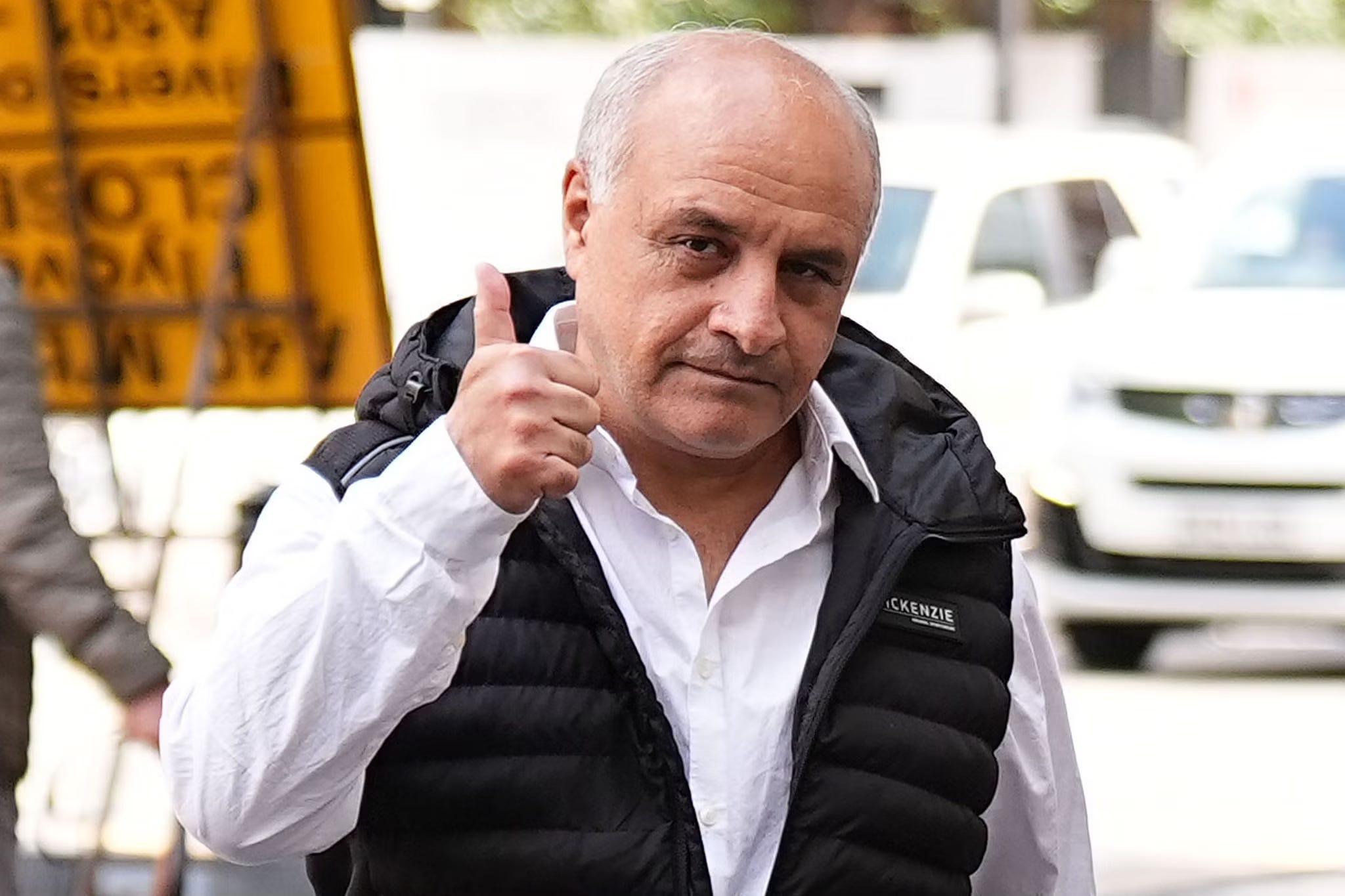
“There is no offence of blasphemy in our law,” Bennathan said. “Burning a Koran may be an act that many Muslims find desperately upsetting and offensive. The criminal law, however, is not a mechanism that seeks to avoid people being upset, even grievously upset. The right to freedom of expression, if it is a right worth having, must include the right to express views that offend, shock or disturb.”
Such rulings are not normally regarded as precedents, but remarks made in 2013 by Lord Justice Leveson in R v X Ltd suggest that reported judgments issued by a High Court judge in the crown court may be considered authoritative.
Routes of appeal
Readers may wonder how a prosecutor may appeal to the High Court against an acquittal by the crown court following a conviction in the magistrates’ court.
A “person aggrieved” by a decision of the magistrates’ court has three possible ways of challenging it:
an appeal to the crown court
an appeal to the High Court by way of case stated
an application to the High Court for judicial review
Coskun brought a simple appeal to the crown court, which was required to hear the case afresh. He had been convicted under the Public Order Act 1986 of using disorderly behaviour “within the hearing or sight of a person likely to be caused harassment, alarm or distress thereby”.
The crown court found that Coskun’s protest was not aimed at a “person”. It took place near a secure and recognised location. The defendant was alone. It was daylight. His protest lasted no more than two or three minutes.
After considering the evidence, Bennathan and the magistrates said
the prosecution have not succeeded in making us sure either that the defendant’s conduct can properly be found to be disorderly, or that it was within the hearing or sight of a person likely to be caused harassment, alarm or distress thereby.
Under the Senior Courts Act 1981, a decision of the crown court — except one relating to a trial on indictment —
may be questioned by any party to the proceedings, on the ground that it is wrong in law or is in excess of jurisdiction, by applying to the crown court to have a case stated by that court for the opinion of the High Court.
A further appeal is possible to the Supreme Court if permission is granted.
Challenge
As a matter of law, there can be no challenge on the ground that the crown court’s decision was against the weight of the evidence. An appeal can be brought either on the ground that that the crown court acted “in excess of jurisdiction” — which seems vanishingly unlikely, given the seniority and experience of the presiding judge — or that its decision was “wrong in law”.
The Times reported last year that Coskun’s comments about Islam were said by the Crown Prosecution Service to have been an “attack against a religious group, linking the group as a whole with terrorism”, and could not be dismissed as “intemperate criticism or protest against the tenets of the Muslim religion”.
Appeal papers seen by the newspaper noted that Islam was the second-largest religion in Greater London and said: “It is a notorious fact that burning the Quran is a highly controversial act that has led to widespread international protests and condemnation, particularly from Muslim communities and governments, and has provoked numerous well-documented incidents of disorder and violence.”
Another view, put by defence lawyers when the case was before the district judge, was that prosecutors were trying to bring back the law of blasphemy and expand it to include Islam. The offences of blasphemy and blasphemous libel under the common law of England and Wales — which had always been confined to attacks on the Christian faith — were abolished by parliament in 2008.
A Crown Prosecution Service spokesperson was quoted as saying in November: “There is no law to prosecute people for ‘blasphemy’ and burning a religious text on its own is not a criminal act. Our case remains that Hamit Coskun’s words, choice of location and burning of the Quran amounted to disorderly behaviour, and that at the time he demonstrated hostility towards a religious or racial group, which is a crime.”
Comment
The prosecution appeal will be heard next Tuesday by Lord Justice Warby and Mrs Justice Obi. Yesterday the court published an order on its own initiative allowing media representatives and members of the public to watch the appeal remotely if they complied with specified conditions.
This is very much to be encouraged. As the court says, there is likely to be media interest in the hearing. But successive governments have been promising for years to allow hearings in the Administrative Court to be broadcast or livestreamed without the need for a formal application. It is surely in the public interest for the limits to public protest to be fully understood by the public as a whole.
Update 17 February: judgment has been reserved.
Update 27 February: the prosecution’s appeal has been dismissed. The Court of Appeal answered “yes” to this question from the High Court:
On the evidence we received, were we entitled to conclude that the respondent’s conduct was not “disorderly”, and that it was not “likely” to have caused a person within the hearing and sight of it the necessary “harassment, alarm or distress?”
There is a summary of court’s reasons as well as the full judgment.
So, let’s say he had all the same vitriol and sentiment but without burning the Quran, then he wouldn’t be charged? Is it the simple act of burning a book that makes it illegal in the mind of the CPS? What if he burned a Harry Potter book? They aren’t charging him with book burning are they? Where is the specific legal turning point around the book itself?
I also see this from your post:
"The Times reported last year that Coskun’s comments about Islam were said by the Crown Prosecution Service to have been an “attack against a religious group, linking the group as a whole with terrorism”, and could not be dismissed as “intemperate criticism or protest against the tenets of the Muslim religion”.
Again, feels very much "two tier", look at all that is being thrown at Jews and Israelis endlessly every week and I have never seen the CPS take this line.
. Is this prosecution because the book burning is likely to stir up Muslim groups to violence whereas burning the bible would not lead to prosecution because the same can't be said of Christian groups? A genuine question