
Diplock courts
The really hard work starts after the trial, a judge told me

Few judges have spoken about the pressures of trying the most serious cases without a jury. One who did was Lord Carswell, who sat in Northern Ireland before his appointment to the UK’s highest court in 2004.
I interviewed the former lord chief justice at Gray’s Inn on 21 November 2005 before an audience of students. There was also a good turnout of his fellow benchers — the barristers and judges who make up the inn’s governing body.
As arranged, I wrote up our discussion for the Daily Telegraph, where I then worked. It was published later that week. The interview no longer seems to be available online but it was quoted in Carswell’s obituary.
I am republishing this lightly edited version as a contribution to the debate on judge-alone trials in England and Wales.
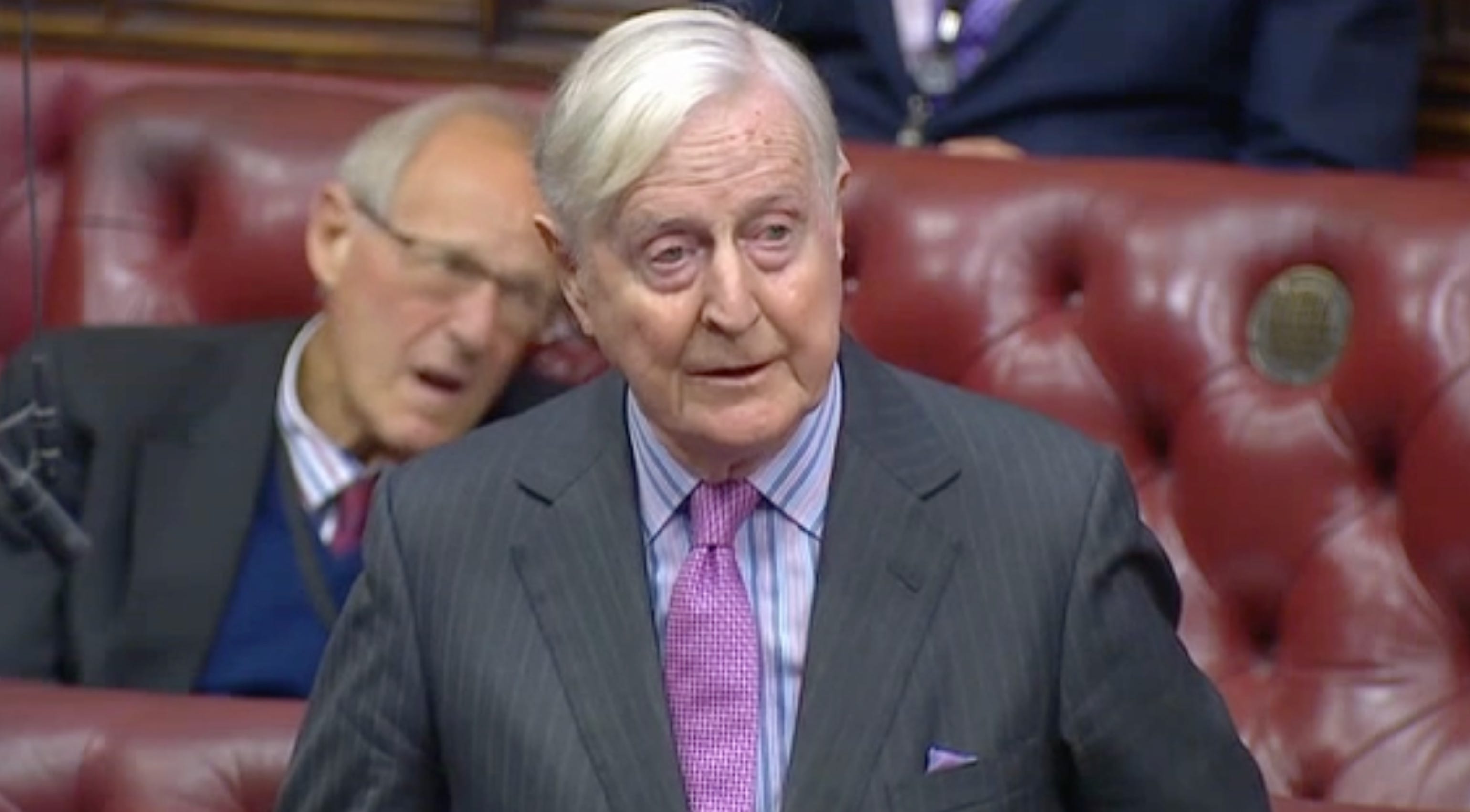
“I would not like to think I convicted anybody who should have got off,” Lord Carswell tells me. Not many senior judges can say that, because not many senior judges in the United Kingdom have to decide whether or not to “convict” a defendant: the verdict, as they always tell members of the jury, “is a matter for you”.
But in Northern Ireland, where Lord Carswell was lord chief justice until he became a law lord nearly two years ago, judges still preside over “Diplock courts”, trying terrorist cases without a jury.
Only some five per cent of serious cases are tried in this way at the moment, compared with more than 40 per cent in 1985. The system was introduced in the early 1970s after terrorist activity in Northern Ireland had reached such a pitch that juries in some courts simply refused to convict anyone charged with a terrorist offence, however “copper-fastened” the evidence was — in Lord Carswell’s phrase. He found it a very heavy responsibility.
“It’s very testing. It’s very tiring. And, at the end of the case, there’s not the catharsis of the jury verdict. Everybody just goes home. And then the really hard work starts,” he says.
“Unless it’s a very obvious case, the judge has to go through all the evidence, go through all the arguments, do any necessary reading or research and then write a judgment — with nobody else to lean on. Jurors have each other, [judges in] the Court of Appeal have a couple of other members to discuss the case with, but the non-jury trial judge is on his own.”
At the end of the process, however, there is a reasoned judgment, which may give the defendant grounds for appeal: permission for a further hearing is not required. This puts the defendant in a stronger position than someone convicted by a jury, who normally needs leave to appeal.
If there had been no Diplock courts in Northern Ireland, law and order would no doubt have broken down completely. But did judges sitting alone convict defendants who would properly have been acquitted by a jury?
“Definitely not. I would like to think that there was no decision by any judge sitting alone that was not correct in terms of guilt or innocence,” the law lord tells me.
The judges even preserved common-law rules allowing confessions obtained through oppression to be rejected as inadmissible, though this protection was not included in the legislation covering non-jury courts. Eventually, parliament gave its approval to what the judges had been doing all along.
I ask him how judges feel when they see people they have convicted of terrorist crimes being released under the Good Friday agreement of 1998.
“The judges feel they have done their job, he says. “This is somebody else’s doing and they’re not going to lose sleep over it.”
Giving his first media interview after more than 20 years as a judge, Lord Carswell is naturally reluctant to be drawn into matters of political controversy — and particularly some recent changes to court procedures in Northern Ireland.
Judges there will no long swear to “well and truly serve our Sovereign Lady Queen Elizabeth II”. Courts in the province will no longer carry the Royal Arms, except in half-a-dozen courthouses where they are already on display. Lord Carswell accepts that these changes worry some people “on a political level”, but stresses that they will make no difference to how judges behave in court.
However, the law lord is a little more forthcoming on the government’s plans to allow judges to try complex and serious fraud in England and Wales without a jury.
“I have always thought there is quite a lot to be said for it,” he says. “I have had to try fraud cases with juries, I have had to prosecute them, and the standard wisdom is that a good prosecutor can always simplify things for a jury.”
He is not convinced. “Some people say if it can’t be understood by a jury it shouldn’t go ahead as a trial; others say that a judge is better able to understand all the small pieces that go together to make up the mosaic of a fraud.”
Lord Carswell is well aware that the criminal bar was opposed to any reduction in jury trials. “They’re in business to get people off and they feel that this gives them the best shot at it.”
Are they right?
“Not always. I have known juries to convict when, if I had been sitting alone, I would have said I had a reasonable doubt. So it doesn’t always follow.
“They say in the street that if you have an identification case you are far better with a judge alone than a jury because juries believe in identification and judges are sceptical.”
He recalls one super-grass terrorist case involving 27 defendants, 30 incidents are more than 200 charges. The non-jury trial lasted 10 months — not bad in the circumstances — plus another month in which Lord Carswell did nothing but write his judgment. Could a jury have given a true verdict on all those counts?
“It’s asking an awful lot of people who do not have the massive noting that a judge will have accumulated by the end of a trial of that length,” he concedes.
On the other hand, it is asking an awful lot of the trial judge. Lord Carswell favours fraud cases being tried by a judge sitting with a panel of assessors — not the government’s preferred option.
As a judge in Northern Ireland, Lord Carswell has had to put up with a high level of security — though, having almost been blown up [by a bomb under his car] the night before he started as a judge, he says that restrictions on his personal freedom are “preferable to the alternative”.
Lord Carswell served as a lord of appeal until his retirement in 2009. He died in 2023 at the age of 88.
More people should be aware of Diplock courts and the reasons they were eventually abolished. The reasons people objected diplock courts sounds a lot like how an alleged rape trial plays out today - even with a jury!! Relies on uncorroborated testimony, hearsay etc etc if that was deemed as not acceptable to alleged terrorists why do they put people accused of rape on he-said she-said accusations through the same thing? It is not a "fair-trial"
Diplock courts were abolished in 2007 (effectively phased out by July 2007 via the Justice and Security (Northern Ireland) Act 2007) primarily due to the improving security situation following the Northern Ireland peace process. They were replaced because they were seen as undermining human rights and due process, and their removal was a key part of "security normalisation" under the Good Friday Agreement.
Reasons for Abolition
The Peace Process: As paramilitary ceasefires became established, the urgent need for emergency, non-jury, one-judge courts diminished, leading to a commitment in the 1998 Good Friday Agreement to "security normalisation".
Human Rights Concerns: Critics, including nationalists and human rights groups, argued that Diplock courts violated the right to a fair trial, particularly due to their reliance on confession evidence.
Discrediting of the System: The courts were heavily criticised for relying on potentially unreliable evidence and forcing judges into difficult "intellectual gymnastics" by both assessing admissibility and determining guilt.
t
Return to Normality: Their existence was inconsistent with a normal society, as argued by many politicians and legal experts at the time.
Background and Transition
Introduction: Introduced in 1973 to combat the intimidation of jurors in paramilitary cases.
Exceptions: While abolished for most cases, the legislation retained a provision for the Director of Public Prosecutions to order a non-jury trial in exceptional circumstances where there is a risk of juror intimidation or bias.
Legacy: Despite criticisms of violating human rights, the Diplock system was often defended during the Troubles as a necessary measure against paramilitary intimidation of jurors.
BBC
BBC
+4
Great article.
A busy silk friend of mine, who spent some time in Northern Ireland recently in a judge only trial, told me the trial overran hugely because the judge was constantly given other matters to attend to. Without a jury kicking their heels to consider, the decision not to sit was too easy to make.
I fear this will be the English/Wales experience, too, should Lammy have his way.