
HAC v WMP
West Midlands police chief in rematch against Home affairs committee MPs

The West Midlands chief constable Craig Guildford will again face searching questions from the Commons home affairs committee this afternoon about arrangements for policing a Europa League match between Aston Villa and Maccabi Tel Aviv last year. Birmingham City Council representatives will also give evidence to MPs.
Supporters of the Israeli club were initially banned from attending the match on 6 November after an assessment by the local safety advisory group. West Midlands police claimed Maccabi Tel Aviv fans who had attended a match in Amsterdam a year earlier had thrown passers-by into canals and attacked Muslim communities, requiring the deployment of thousands of Dutch officers.
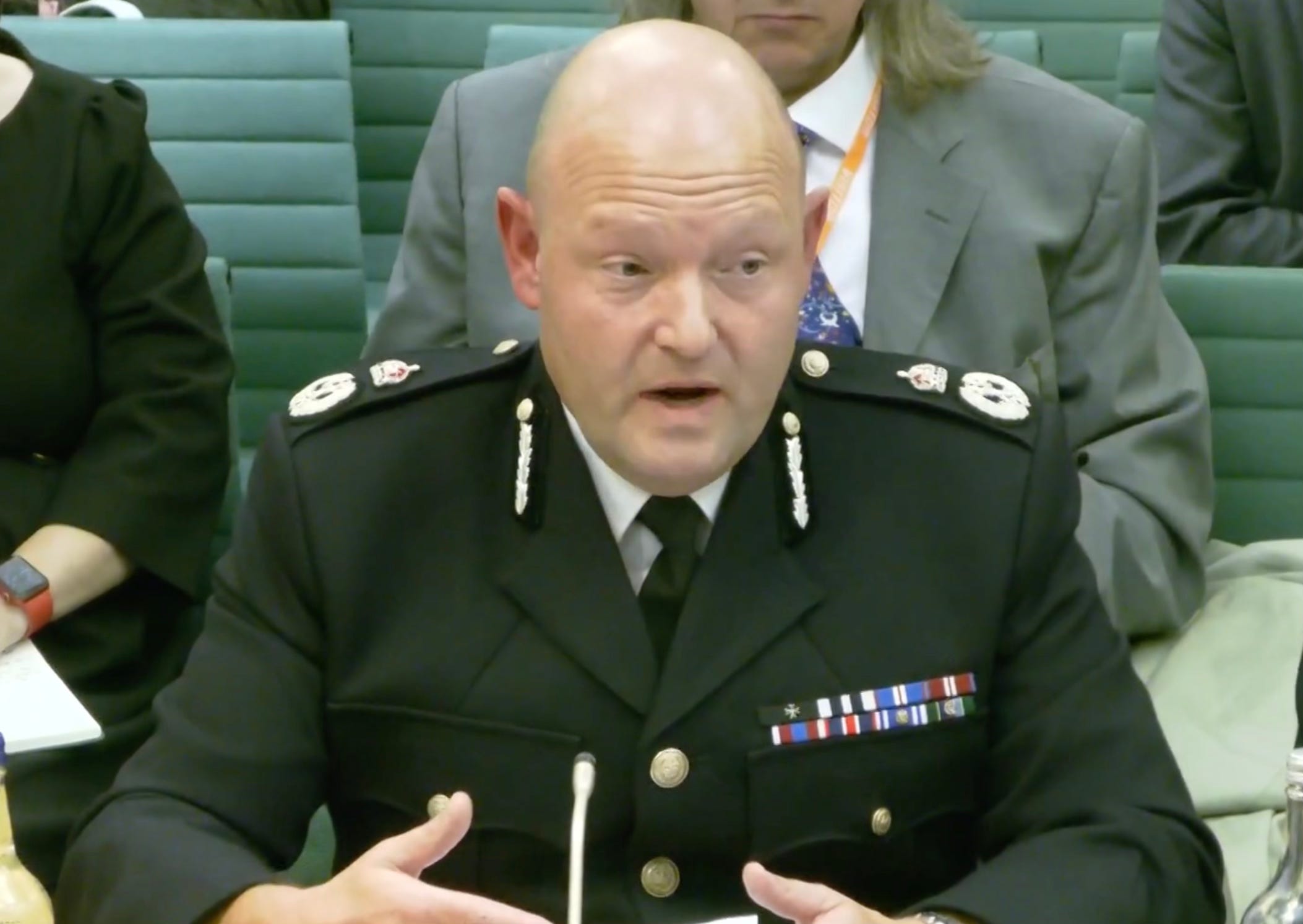
Guildford stood by the allegations even after police in the Netherlands dismissed them as untrue or misleading. At what was meant to be a one-off evidence session before the committee on 1 December, he said he believed the account given by his chief inspector.
Guildford was also questioned about a police intelligence report that referred to an entirely fictitious match between the Tel Aviv club and West Ham. Asked whether the report had been created using AI, he blamed the false reference on “social media scraping”.
The committee chair, Dame Karen Bradley, put questions to Guildford’s assistant chief constable, Mike O’Hara:
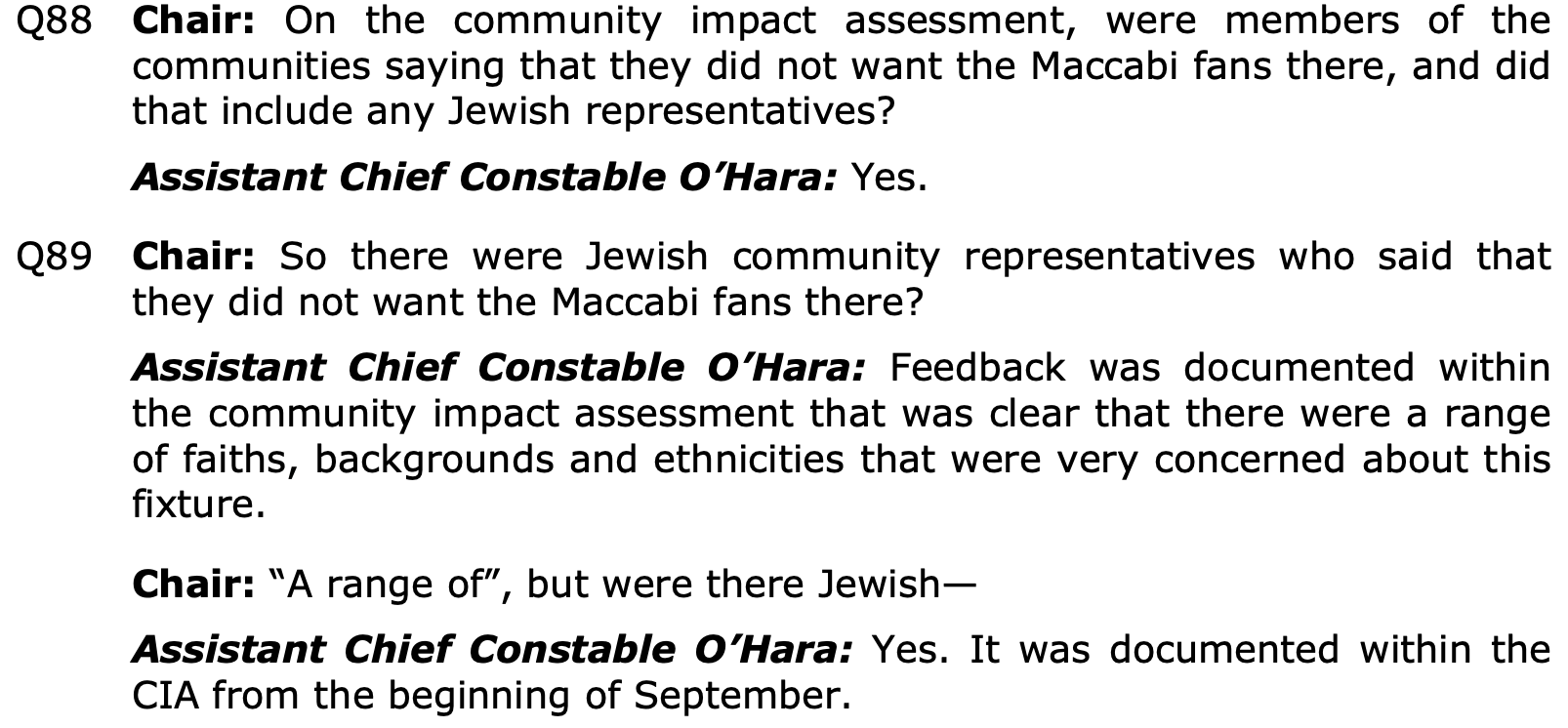
But this was not true. In a letter to the committee sent on 19 December, Guildford said:
We can confirm that there is no documented feedback from Jewish representatives prior to the decision being communicated which expressed support for the ban on Maccabi Tel Aviv fans…
ACC O’Hara and I would like to take this opportunity to formally apologise to the Home Affairs Select Committee for any confusion caused and would like to reassure you that there was never any intention to mislead whatsoever.
Two days ago, the Telegraph reported that three of the eight Muslim organisations that the force had consulted as part of its community engagement drive had hosted preachers who promoted antisemitic conspiracy theories or called for the death of Jews.
The Sunday Times accused West Midlands police of producing false evidence to justify banning Israeli fans from the away match. The force was said to have drawn up the intelligence after the local council said privately it had been challenged over the decision and needed a “clearer rationale”.
Leaked minutes from a safety advisory group meeting said the police had initially agreed to operate on the assumption of “no away fans” in what was described as “the absence of intelligence”.
A summary of a closed-doors meeting on 7 October reported by BBC News said that the force’s preference had been based on what one officer described as “conversations with piers [sic] and my professional judgment”.
The Sunday Times said:
The force only produced significant and “new” intelligence about Maccabi’s fanbase after a Birmingham council staff member confided that they had faced questions and been asked to obtain information to pre-empt criticism or claims of anti-Jewish sentiment.
Nick Timothy, the Conservative MP for West Suffolk, said the new paperwork showed West Midlands Police had invented its claims to fit a political decision made in response to local pressure.
Some might care little about foreign football fans. But this scandal is far more serious. It is about whether we can trust the police to do their vital work without fear or favour — and who holds the power in modern, multicultural Britain.
MPs will be able to judge today whether Guildford and his officers deserve that trust.
Update 1215: an internal police review sent to the chief constable on 21 October — and published by the home affairs committee this morning — discussed four possible options:
no supporters at all at the match
a reduced number of Maccabi supporters
no Maccabi supporters
full capacity
It concluded:
It is the belief of the review team that any of the above options would require a sizeable and cross-force policing operation due to the nature of the threat, harm and risks posed.
The lack of away supporters naturally removes the likelihood of serious disorder between opposing football supporters and with the police (as was the case when Legia Warsaw visited Villa Park) but does not eradicate risks. If this option is pursued, the high profile commentary is still likely to have increased the risk and scale of opposing protest groups.
The issue of policing protest and community tension becomes the focus in the absence of rival football supporter behaviours. The narrative will not remove the over-arching risk, entirely regardless of which option is implemented.
In essence, there is no preferable option but the least worst would be away fans with a reduced allocation or, subject to ongoing discussions with government, to retain the ban on away fans.