
How justice survived
On a filament dangling by a thread from the skin of its teeth

The criminal justice system must “identify and pursue medium- and long-term change,” a senior judge said at the criminal courts improvement group’s first conference yesterday at Guildhall in the City of London.
Lord Justice Green did not say whether he was supporting the jury reforms proposed this week in David Lammy’s courts and tribunals bill. But Green, who is senior presiding judge for England and Wales, cited recent findings by Sir Brian Leveson that the system was under “immense stress” and then welcomed Leveson to the stage “with a very real personal sense of pleasure”. So it seems safe to infer that the senior judiciary will not be lobbying against the reforms that Leveson recommended and that Lammy adapted.
The criminal courts improvement group, set up to support the recovery of the courts after the Covid-19 pandemic, has since developed into a standing forum through which different agencies involved in criminal justice cooperate to promote more effective ways of working and to address the wider challenges facing the system.
Green, who chairs it, recalled the benefits of joint action during the riots from 29 July to 7 August 2024 that followed the stabbings in Southport:
Many defendants received custodial sentences imposed within days of the offending. The rioting ceased. But as each day passed cell capacity dwindled and we headed towards crisis point.
On 27 August 2024 at 9 am… leaders from across the system met on Teams. The previous bank holiday weekend had seen the Notting Hill Carnival and the Leeds and Reading festivals — and many arrests. This was the pinch point. If we survived that day, we knew that prison vacancies would increase over the next week.
At one minute past nine, we learnt that we were close to capacity. Had we reached capacity, we would have been forced to contemplate the temporary closure of magistrates’ courts, in which case the police would have been unable to bring defendants to court within the required time limit and the justice system risked coming to a halt.
We had survived by a filament dangling by a thread from the skin of our teeth.
Green, who is tipped for promotion in the coming months, spoke of the need for system-wide reform. He outlined four principles:
The imperative need for collective action.
The need to strive for greater connectivity between the operational and the policy.
The imperative need to embrace and harness technology.
The need to maintain momentum.
He also thought we needed to be robust in accepting a degree of risk. “When something does not work,” he said, “we should embrace that failure and treat it as a learning experience for the future, not a cause for recrimination.”
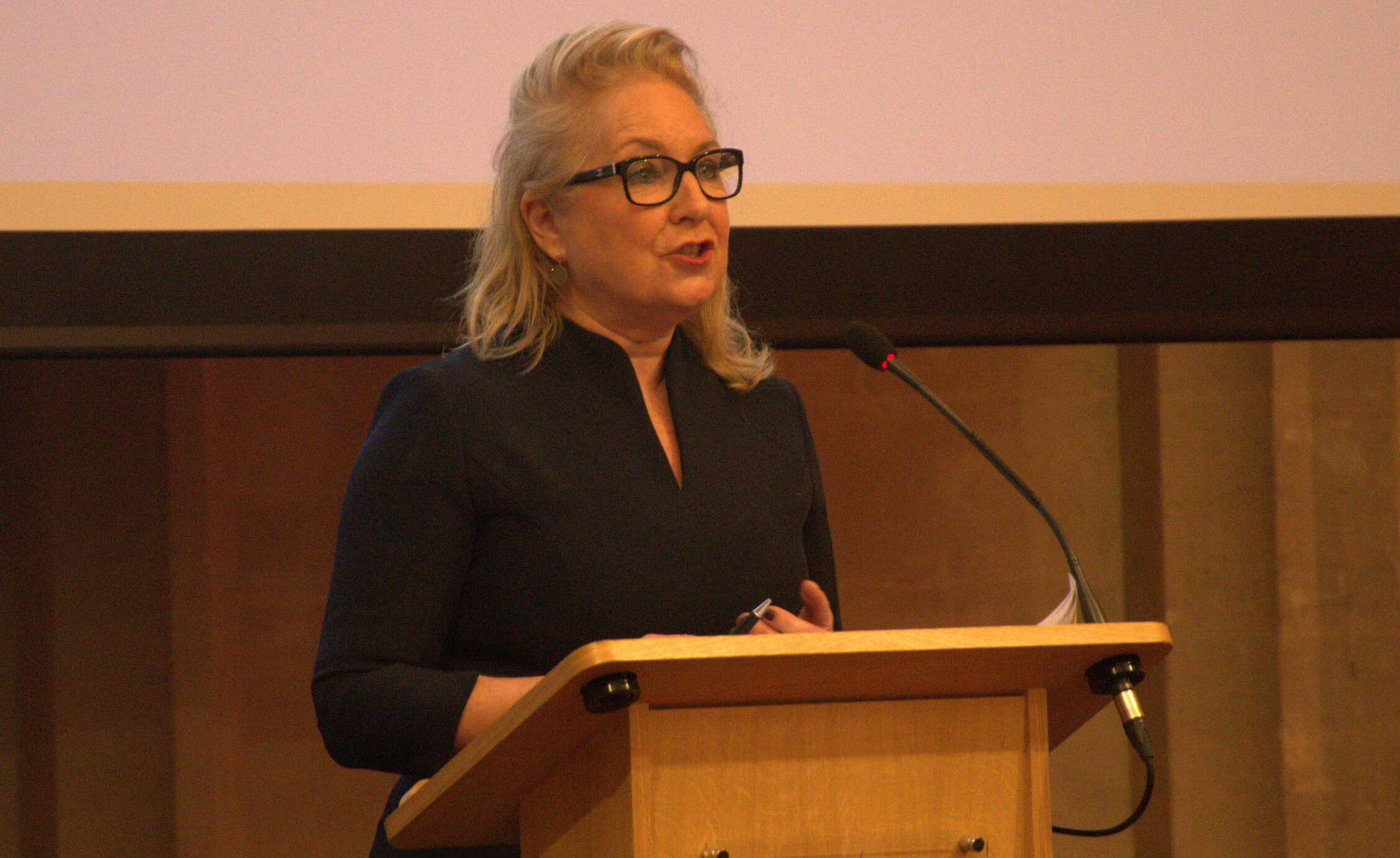
A similar point had just been made by the lady chief justice. “Along any road there will be hurdles,” said Baroness Carr of Walton-on-the-Hill:
Continued high-quality recruitment for the judiciary and in wider justice agencies is paramount; our technology must keep pace with the workload demanded of it; our courts estate must be fit for purpose.
But when things go wrong, and they will, will we be the ones craning our necks to ogle the fallout? Or will we be those offering help, collaboration and solutions to work towards our common destination?
The latter, I hope.
Carr strongly welcomed the announcement of uncapped crown court sitting days. Combined with a revised listing framework, it would enable judges to use the courts to their full potential.
On reform, though, she was more cautious:
Policy decisions are now with parliament as it considers the courts bill. It will be a matter for politicians, not judges. But whatever criminal justice policies parliament decides to enact, I remain — the judiciary remains — committed to playing a full and active part in bringing down the backlogs and modernising how the criminal courts operate.
Courts and tribunals
A long-term change to the civil justice system is included in the bill Lammy published this week. Clause 18 brings together the courts and tribunals of England and Wales under a unified leadership. The senior president of tribunals — currently Lord Justice Dingemans — will become a head of division reporting to the lady chief justice, like the master of the rolls, the presidents of the Kings’s Bench and family divisions and the chancellor of the High Court.
All this relates only to the operation of tribunals in England and Wales. Some tribunals operate also in Scotland and Northern Ireland. The senior president will retain his existing responsibilities for these tribunals and, as at present, will exercise them independently of the hierarchy in England and Wales.
The holder of the office of lord chief justice of England and Wales will become president of the courts and tribunals of England and Wales. The senior president will become the head of tribunals justice. There is likely to be a deputy head of tribunals justice.
None of this is intended to affect the day-to-day running of the First-tier Tribunal, the Upper Tribunal, the employment tribunals or the Employment Appeal Tribunal. But the chief justice will become responsible for making these tribunals accessible, fair, efficient, expert and innovative.
I shall be analysing the bill’s jury provisions here next week.
Pay
The Ministry of Justice and HM Courts and Tribunals Service published their submissions yesterday to the Senior Salaries Review Body, which is conducting a major review of the judicial salary structure.
The 64-page document says there is no longer a problem in recruiting High Court judges and suggests that the review does not need to focus on recruitment challenges for the senior judiciary. But it’s difficult to recruit enough district judges, employment judges and judges of the First-tier Tribunal. There have also been shortfalls in recruiting circuit judges.
The Ministry of Justice poses a series of detailed questions but does not specify any figures. One option the government is asking the review body to consider for the first time is a starter payment — a bonus paid to judges on appointment.
The submission ends with a table of courts that attract London weighting payments. One of my eagle-eyed readers has noticed that it includes courts at Blackfriars, Reigate and Lambeth — all of which have been closed for some years.
Another reader tells me of problems this month in processing fees for part-time judges, though I don’t know how widespread this may be.
Update 0900: several members of the fee-paid judiciary have received an email in these terms:
We are writing to inform you that we’ve identified an issue affecting your recent payment. We want to sincerely apologise for the inconvenience this may cause. Our internal review indicates that the error arose from manual processing. It is not a system‑related problem.
We are working to resolve this as quickly as possible. As an immediate step, we will be issuing an emergency payment of 40% of your missing gross amount. This emergency payment will be automatically reconciled within your March salary, so you do not need to take any action regarding repayment.
To process this emergency payment, we may need to confirm your bank details. If required, a member of the team will contact you shortly.
We are also cross‑checking this issue against previous payroll problems to ensure there are no repeated impacts.
If you have any questions or believe you have been affected in additional ways, please feel free to reply to this email and we will support you as quickly as possible.
HMCTS, Judicial Fees, Expenses & Payroll Team
I wondered if it might be a scam but this now seems unlikely.
Vet’s final cut
My exclusive report on Tuesday about the abandoned appeal to three justices of the Supreme Court by a vet who had injured animals in his care has attracted considerable attention. There have been significant developments since then and I have added an update to the end of the piece.
When I contacted the regulator at a time of great need I expected them to contact me and arrange transition of care, consultant referrals and support me through procedures that had been abandoned mid treatment by two registrants. Instead they hid materials in a draw to protect their registrants and delayed a hearing many times over 4 yrs. This is the problem with self regulation and conflicts of interest. Delaying until business deals are secure and retirement beckons still avoids apologising to female patients.
I faced many hurdles and I face risk if I speak out. We spoke up to a dental regulator after many years and with good reason. I also spoke up because many patients who have had similar experiences risk (an avoidable) stroke and years of related pain following predictable injury if regulations are not followed. The regulator has labelled us ‘unreasonably persistent contact and unacceptable behaviour policy’ while at the same time sympathising and admitting a new case would be difficult to prove. It isn’t the failure by the regulator that shocks me as I specifically asked that two registrants receive no financial burden and remain anonymous.
What shocks me is how he perceived me as a female patient and how he treated me throughout and how when eventually I became assertive he immediately and confidently told me he could rely on a network of colleagues legal and medical and I would get nowhere if I said anything.
This continues to shock me as it would anyone seeking a proper apology.
If there is a learning experience for the future it must be that people asserting they have good character and are charming and using friends to write letters saying so against overwhelming evidence that they are not, are asked by their family, friends work colleagues lawyers and doctors. Have you apologised to the patient?
Apologising properly costs nothing but I have had a lifelong burden that suited him right up until he lost control of his patient and his Indemnity providers were contacted because of injury.
This club or network also withheld medical care when I was in real need.
This is not charming or good character it’s a system.
This is what needs to change.