


The rule of law, as a phrase, is opaque, the head of civil justice said this week. As Sir Geoffrey Vos explained, “non-lawyers and even many lawyers think it is about the enforcement of law against citizens rather than enforcing, or rather upholding, the rights of citizens against the state.”
The master of the rolls wondered if we could find a better term for the concept. He offered no suggestions himself. But if lawyers were going to continue using the phrase when speaking to those outside the legal profession, he thought they should at least say what it meant.
Vos continued:
We should explain that, as proponents of the rule of law, we are proponents of the clear and accessible predictability of the legal system, that we support open justice and access to fair justice for all, that we are seeking to protect the fundamental rights of all, and we support those states that exercise proportionate and accountable power over their citizens in good faith and those states that comply with their obligations under national and international law.
We should, perhaps, also explain that what we are talking about is not for the benefit or self-aggrandisement of the lawyers, but for the benefit of all citizens — to enable them to live and let live in a tolerant society where their rights are respected. It is, as I have said, all about tolerance and respect — not about protecting lawyers or even judges.
The second most senior judge in England and Wales was speaking at a meeting of the Alliance for Lawyers at Risk, a charity that brings together prominent members of the British legal community to support lawyers and human rights defenders throughout the world who face personal danger because of their professional work.
The alliance makes an annual award in memory of Sir Henry Brooke CMG (1936-2018), who was vice-president of the Court of Appeal from 2003 until his retirement in 2006. Brooke’s parents were both appointed to the House of Lords, as was his brother. A former president of the Society for Computers and Law, he launched a legal blog in 2015 that remains a model of its kind.
This year’s Henry Brooke award went to Ruth López (pictured), described by the judging panel as one of the most prominent and courageous defenders of the rule of law in El Salvador. Her investigations, the panel added, have brought to light issues such as unlawful spyware surveillance, political patronage networks and unconstitutional legislative measures that restrict and undermine public access to information.
Vos presented the award to Lopez’s husband. That was because her work as director of the anti-corruption and justice unit at Cristosal, a regional human rights organisation working across El Salvador, Guatemala and Honduras, led to her arrest and imprisonment last May. She has not been tried or convicted.

Action taken against López by the authorities in El Salvador has been widely condemned by lawyers’ groups. Last July, the American Bar Association selected her for its annual international human rights award.
To learn more about the Alliance for Lawyers at Risk — what it does and what impact its work can have — I spoke yesterday to its president, Dominic Grieve KC, the former Conservative MP who served as attorney general from 2010 to 2014 and then as chair of parliament’s intelligence and security committee.
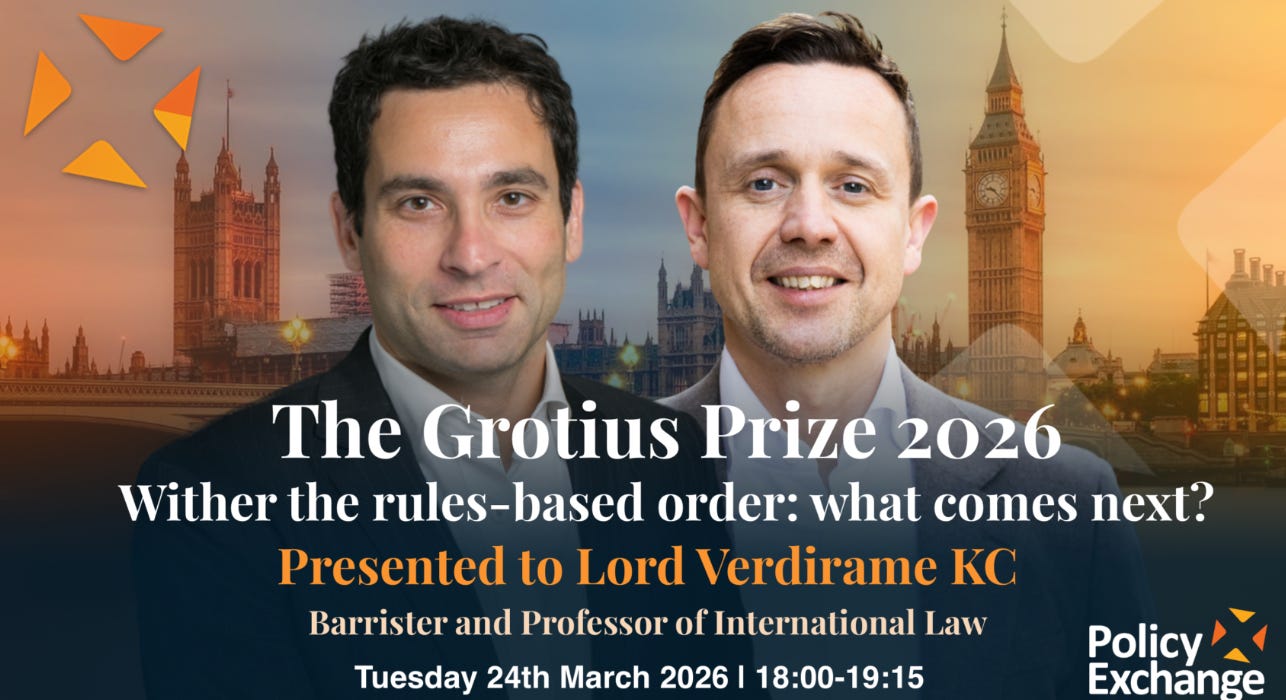
While interviewing Grieve for the latest episode of A Lawyer Talks, I took the opportunity to ask him what he made of the advice thought to have been given to ministers by Lord Hermer KC, the current attorney general, on the lawfulness of military action against Iran by the US and Israel. That issue struck me as particularly timely ahead of a forthcoming discussion between Professor Lord Verdirame KC and Professor John Bew CMG:
My weekly podcast is a bonus for paying subscribers to A Lawyer Writes. Everyone else can hear a short taster by clicking the ► symbol on the graphic at the top of this page.


