
Kneecap appeal today
DPP argues that court has jurisdiction to hear terror charge

A judge’s decision to dismiss a high-profile terrorist prosecution will be challenged in the High Court today.
Liam Óg Ó hAnnaidh, also known as Liam O’Hanna, was accused of displaying a flag in a public place showing support for the banned terrorist organisation Hezbollah. An offence under section 13 of the Terrorism Act 2000 was said to have been committed on 21 November 2024 at a concert venue in London where the defendant was performing as part of a rap group called Kneecap.
Last September, the chief magistrate for England and Wales ruled that the attorney general’s consent for the prosecution had been given too late. This morning, counsel for the director of public prosecutions will argue that a law officer’s consent is not needed until a defendant answers a written charge in court.
Today’s hearing is what’s called an appeal by way of case stated. Unlike the position when a defendant is acquitted by a jury in the Crown Court, either the prosecution or the defence may question proceedings in the magistrates’ courts within 21 days by asking the court “to state a case for the opinion of the High Court on the question of law or jurisdiction involved”.
If the High Court rules that Goldspring’s interpretation of the law was wrong, the case will go back to the magistrates’ court for trial. If not, the respondent’s acquittal will stand.
Today’s appeal will be heard by Lord Justice Edis and Mr Justice Linden, sitting as a divisional court. Edis is vice-president of the Court of Appeal’s criminal division and Linden was an employment and discrimination specialist at Matrix Chambers before his appointment as a High Court judge.
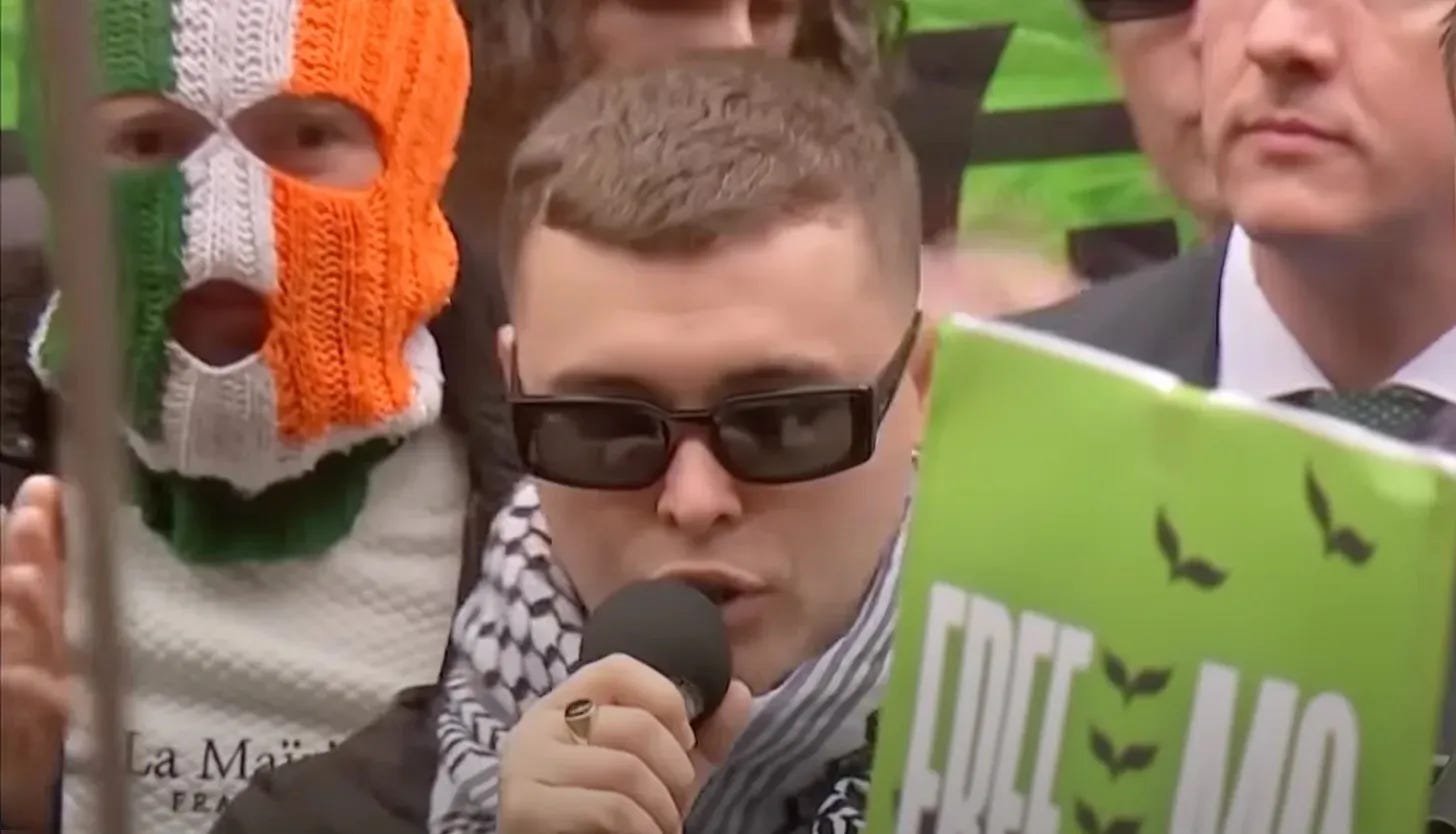
Acquitting Ó hAnnaidh on 26 September, the chief magistrate said he was not ruling on the defendant’s innocence or guilt.
“Nothing in this ruling should be read or interpreted as expressing any view, endorsement or rejection of the allegations themselves,” Senior District Judge Goldspring said. “The sole and discrete issue with which the court is concerned is whether it has jurisdiction to deal with the prosecution.”
Goldspring concluded that the attorney general’s permission had been needed before proceedings were instituted. As I explained at the time, that could have been given before the six-month deadline had expired if Scotland Yard had not put off a charging decision until what it believed was the last possible moment.
In court, the Crown Prosecution Service had argued unsuccessfully that the attorney general’s consent was not needed until a defendant answered the charges at a hearing. The cases on which prosecutors relied included:
R v Lambert (2009)
R v CW (Christopher Welsh) (2015)
Defence lawyers persuaded the senior district judge that these cases applied only to charges heard in the Crown Court.
Facts and issues
This summary of the facts and issues is taken from an order made by Linden last week:
On 21 May 2025, the Metropolitan Police issued a notice of criminal charge in respect of the alleged offence. This required the respondent to attend a hearing at the magistrates’ court on 18 June 2025. The notice was issued within the six-month deadline for instituting proceedings under section 127 of the Magistrates’ Court Act 1980. However, section 117 of the Terrorism Act 2000 provides that proceedings for an offence under section 13 of the 2000 act may only be instituted with the consent of the director of public prosecutions and that he may only consent to a prosecution with the permission of the attorney general. That permission was not obtained until 22 May 2025.
The question for the divisional court is whether the chief magistrate was right in law to hold that the proceedings against the respondent were not instituted in the correct form within the six-month statutory time limit set by section 127 of the 1980 act because the attorney general’s permission had not been obtained by 21 May 2025 and that therefore the magistrates’ court did not have jurisdiction. The respondent argues that he was.
The director of public prosecutions argues that he was not. His case is that for the purposes of section 117 of the 2000 act it was sufficient that the attorney general’s permission had been obtained before the respondent made his first appearance at court on 18 June 2025 to answer the written charge.
Update: judgment was reserved.
Update 11 March: the prosecution’s appeal was dismissed.