
Russia and Belarus
A meretricious, meaningless, groundless, spurious, absurd, ridiculous comparison

Leaving the European convention on human rights would be “putting us in the company of Russia and Belarus”, the attorney general Lord Hermer KC told peers last September. Many others, from the prime minister downwards, have said something similar. This is “nonsense”, according to a new report from the Policy Exchange think tank called “Against cheap rhetoric”.
The report’s argument is a persuasive one:
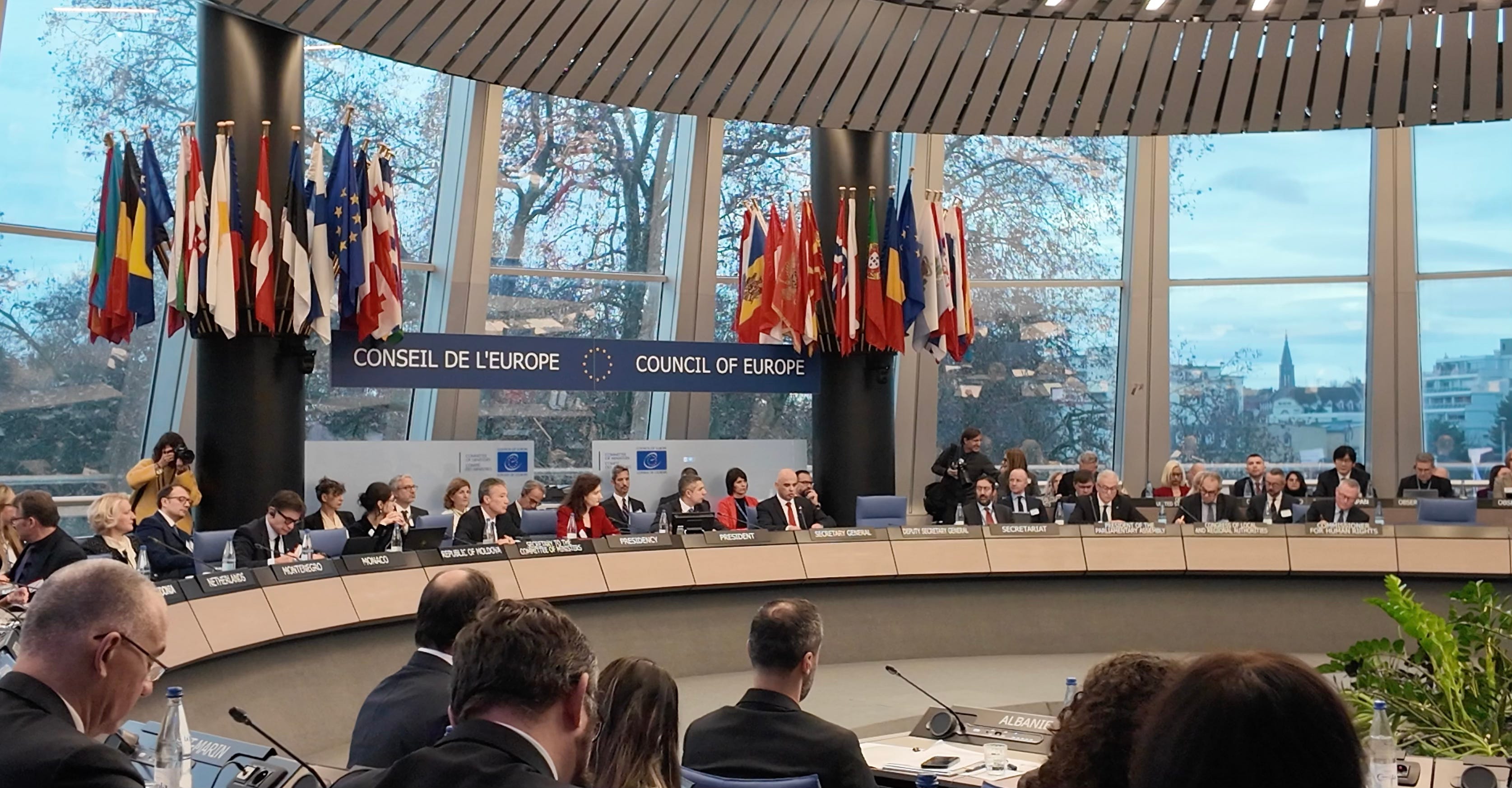
The Council of Europe comprises states that are parties to the human rights convention.
Russia was expelled from the Council of Europe in 2022 because it had invaded Ukraine.
Belarus has never been allowed to join because it fails to respect human rights.
The UK has never been denied entry to the Council of Europe and is not facing expulsion.
If the UK withdraws from the human rights convention it would not necessarily leave the Council of Europe. If it did, it would “almost certainly” be granted observer status — unlike Russia or Belarus.
Remaining in the Council of Europe puts the UK in the company of Azerbaijan and Türkiye, “two states that routinely violate human rights and have violated the sovereignty of other states in the Council of Europe”.
Leaving would put the UK in the company of Australia, Canada and New Zealand, non-European states that share a constitutional tradition with the UK.
The lady doth protest too much, methinks
So there’s no comparison. But if that’s so obvious, why have the three authors devoted a 43-page report to it? Conor Casey, Professor Richard Ekins KC (hon) and Sir Stephen Laws KCB KC (hon) seem to have fellow lawyers in their sights:
The rhetorical force of an apparent connection between UK withdrawal from the ECHR and the authoritarian governments of Belarus and Russia may well have an emotional impact on some people, especially on members of the legal and political elite who are highly attuned to considerations of “image”, to slights real or imagined and to reputational ranking.
Fair enough. But if this argument is so “undeveloped and incoherent” that it “barely constitutes an argument at all”, does it really need seven distinguished public figures to knock it down?

These extracts from their respective forewords summarise their thinking:
Lord Sumption: It should not be necessary to deal so thoroughly with so obviously meretricious an argument. Unfortunately, experience shows that there is a real need for it.
Jack Straw: It’s a “Here be dragons” argument, devoid of serious meaning.
Lord Howard of Lympne CH KC: If it was likely that other states would understand the UK’s withdrawal from the ECHR to mean that we were somehow like Russia or Belarus or, worse, were “aligned” with them, that would be a very real consideration. However, as the authors of this new paper show, any such comparison would be groundless and there is no good reason to credit it.
Sir Malcolm Rifkind KCMG KC: Do we really want to be part of such a dreadful triumvirate, linked to the two European countries that have such an appalling record of human rights abuse and disregard for civic liberties? On first reading the answer sounds obvious but this paper makes clear that such arguments are spurious, if not ridiculous — that we should not give respectability to such charges that could not be taken seriously even in an Oxford Union debate!
Alexander Downer AC: The assertion that UK withdrawal from the ECHR would “align” the UK with Belarus and Russia is preposterous. So too is the assertion that the UK outside the ECHR would resemble either state. Belarus and Russia are authoritarian states; the UK is a free democracy. The comparison is absurd.
Lord Gove: The notion that we would have joined “a club” with Belarus or Russia is as ridiculous as suggesting that the Republic of Ireland is a Moscow satellite because it is not in NATO.
Sir Patrick Elias: This is a ridiculous assertion, not least because it wholly ignores the reason why these states would not be parties to the convention… Indeed, the point is so obviously without merit that I wondered whether the assertion should simply be ignored, being unworthy of the very detailed response provided in this paper. However, the authors show how widely the “common club” argument has been employed, albeit always as cheap political point-scoring rather than as a serious point in an important debate, and I can see why it justifies a response.
So can I — though I think Elias was right to wonder.
The problem is more about perception than substance. The British public has become, at best, equivocal about ECHR and Putin. Due, in no small part, to Donald Trump. Unfortunately, the British press, with few exceptions, encourages ignorance and obscurity.
We won’t see the paper by Sumption et al debated our pubs and supermarkets.