
The new model force
Policing in England and Wales to move from local to national

The home secretary Shabana Mahmood is to publish a white paper today, to be called From local to national: a new model for policing. Some readers may wonder how we know so much about it already. Others may not be quite sure what a white paper is.
That’s understandable; my impression is that they are not as common as they once were. As the parliamentary website explains, “white papers are policy documents produced by the government that set out their proposals for future legislation.” By contrast, “green papers are consultation documents produced by the government.” When ministers used to issue statements of policy that left some details open for discussion, these were sometimes described as white papers with green edges — though that’s not what they looked like.
And how do we there is to be a white paper today? Because reporters have been “briefed”. I use the word advisedly. As the minister’s private secretary Bernard Woolley observes in Yes, Minister, it’s one of those irregular verbs: “I give confidential press briefings; you leak; he’s being charged under section 2 of the Official Secrets Act.”
Of course, government briefings are invariably partial. They play down the cost of the proposals as well as opposition from those affected and the challenges of putting them into effect. But regardless of what the white paper says, Mahmood deserves credit for publishing it less than five months after joining the Home Office.
True, some of these proposals have been around for decades and Home Office officials must have been working on them before she arrived. But the same could be said for the Ministry of Justice, whose secretary of state has yet to tell us in any detail how his plans to curb trial by jury will bring down the backlog in the criminal courts. David Lammy has been justice secretary for just as long as Mahmood has been home secretary and his white paper is not expected until “the spring”.
What the white paper will say
By briefing reporters before publishing her proposals, the home secretary was able to take the initiative on the Sunday broadcasting round and in the weekend newspapers.
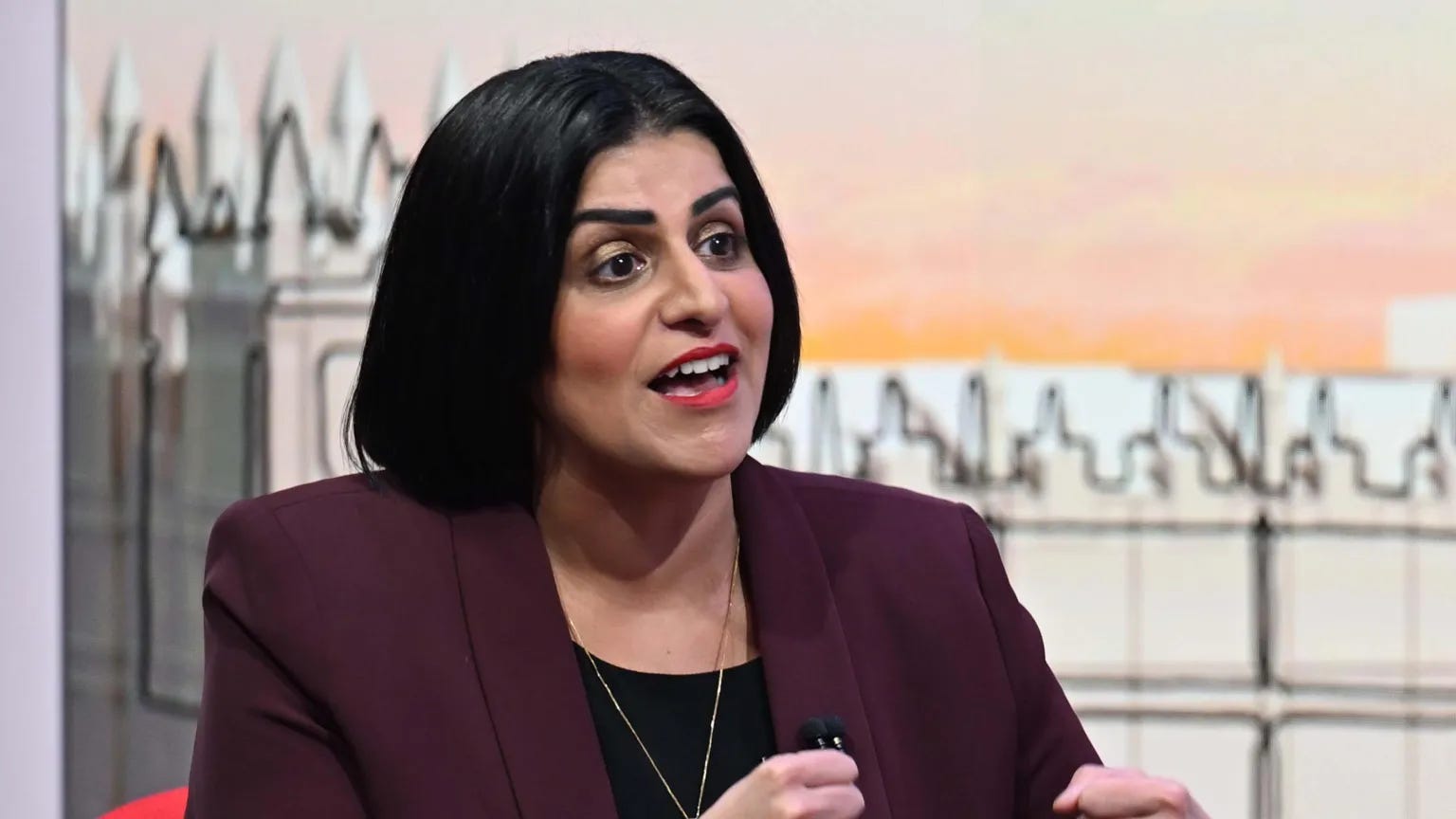
Explaining why she wanted the power to remove underperforming chief constables, Mahmood told the BBC she would have sacked the chief constable of West Midlands Police if she had had the power to do so. Craig Guildford retired this month after criticism of a ban on supporters of Maccabi Tel Aviv attending a match at Villa Park last November.
That proposal had already been announced by the Home Office. Others had not:
A national police service will bring the capabilities of the National Crime Agency, Counter Terrorism Policing, regional organised crime units, police helicopters and national road policing under a single organisation. It will include a new national forensics team.
The new service will be led by a national police commissioner, who will rank as the most senior police officer in England and Wales.
A national public order commander will be responsible for managing large-scale protests and violent disorder.
The number of police forces will be reduced from its present level of 43 to between 10 and 20. Details will be announced after an independent review.
A recruitment drive will be aimed at university graduates. There will be a direct entry route for inspectors so that forces can hire professionals with outside experience.
All police officers will need a licence to serve. Licences will have to be renewed regularly.
Non-crime hate incidents are to be scrapped in their current form.
Police will be required to respond to serious incidents by ensuring officers reach crime scenes within 15 minutes in urban areas and 20 minutes in rural areas.
Local policing areas will deal with common crimes such as shoplifting.
Yes, Minister was a BBC documentary series presented as a 1980s sitcom. It taught us that announcing proposals was the easy bit. The challenge is to make them work.
Update: the white paper has been published.
'Yes, Minister was a BBC documentary series presented as a 1980s sitcom.'
Gorgeous, Joshua. Made my Monday morning.
Joshua, I cannot believe you missed the mandatory "Britain's answer to the FBI". Over the past twenty or so years, governments of both colours always announce the latest rebadging as "Britain's answer to the FBI". Indeed, we've had so many answers, I don't think we know what the question is!
Some of these proposals are to be welcomed. We have far too many very small forces, which means that specialist units (e.g high-tech crime) are invariably small (although attempts have been made to pool). At the other end of the scale, the Met was too big, partly because of it's national responsibilities. It was always slightly odd that a London force had national jurisdiction over certain matters. Similarly, it is odd that West Yorkshire has command of the police helicopters across the country.
I would hope we could get cross-party support to get the necessary bits of this achieved, but I'm not sure either party knows what that means anymore.