
Thwarting defaults
Could the solicitors' regulator have done more to protect clients — and lawyers?

The Solicitors Regulation Authority is looking for a new chair to replace Anna Bradley, who will be stepping down after eight years heading its board. Her successor will have to protect clients and solicitors from law firms that unexpectedly collapse owing huge sums of money, a failure for which Bradley apologised yesterday.
“Sometimes,” she said, “we have not kept pace with the market and mistakes have been made. I am sorry these issues have had such an impact on consumers and the profession — which is why I have focussed on learning and creating the momentum we need to deliver the necessary change.”
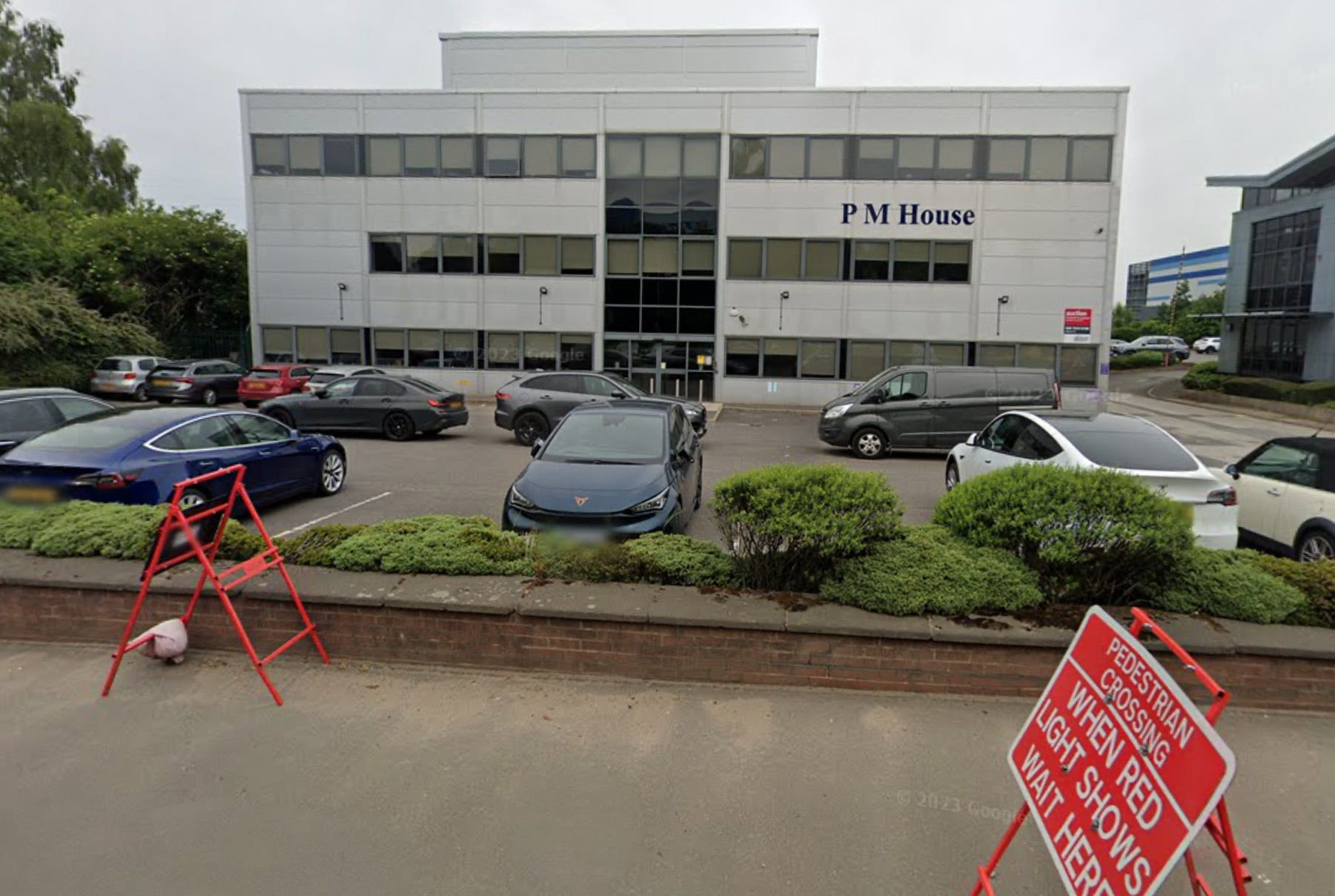
Last month, for example, the solicitors’ regulator said its investigation into the sudden closure in February of PM Law Ltd, whose main office (pictured) was in Sheffield, had revealed “a sophisticated suspected fraud involving the improper removal and misuse of around £39.5 million of client funds”.
That default, like other high-profile failures, will lead to claims on the compensation fund to which all practising solicitors must contribute. As the Law Society Gazette reported recently, the biggest ever single drain on the fund was from the collapse of Axiom Ince, which resulted in around £41 million being paid to clients.
As a result, individual solicitor contributions to the compensation fund rose in 2024/25 from £30 to £90 and contributions from law firms increased from £660 to £2,220. Further substantial increases for 2026/27 were announced recently.
Prevention is better than cure
All this raises an important question: can the failure of a large law firm be predicted and perhaps avoided? New research to be published this week suggests that there is more that the regulator could do with information that is already available.
The research was carried out by Blind Justice UK, a small charity that seeks to promote sound administration of the law. It examined recent collapses by high-profile law firms and tried to identify common factors.
The Legal Services Board, which regulates the other legal regulators, commissioned external reviews of the Solicitors Regulation Authority’s failure to prevent the collapse of two large law firms — Axiom Ince and SSB Law. These reviews identified specific warning signs:
controlling directors with extensive histories of dissolved companies
multi-entity corporate structures linking active and failed firms
rapid name changes
acquisition-driven growth
A thematic review commissioned by the Solicitors Regulation Authority last December raised other red flags:
rapid accumulation of businesses
acquisition of other firms
reliance on consultant solicitors
Blind Justice UK distilled these warning signs into eight risk indicators. Of the 25,000 organisations on the Solicitors Regulation Authority register, it then assessed 961 firms that had three or more offices, an incorporated structure and a Companies House registration number.
Of these, it said,
62 firms had two or more risk indicators.
26 individuals in management positions held appointments at 10 or more dissolved or liquidated companies.
23 firms had directors or designated members who simultaneously held management positions at other regulated entities, linking to 30 connected firms including seven with revoked authorisation.
Blind Justice UK acknowledged that its “scan” of these firms had a number of limitations:
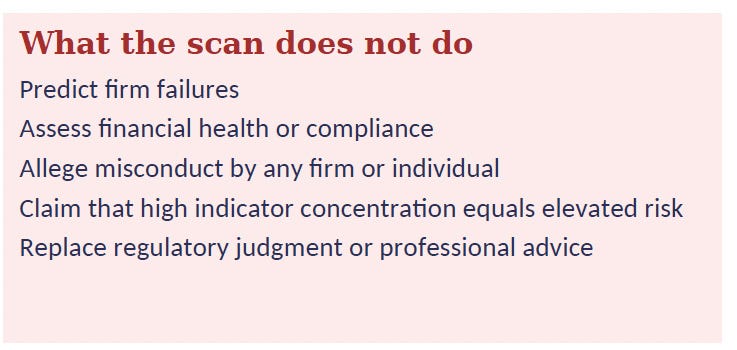
But it argued that the Solicitors Regulation Authority could use this type of analysis to identify potential defaults:
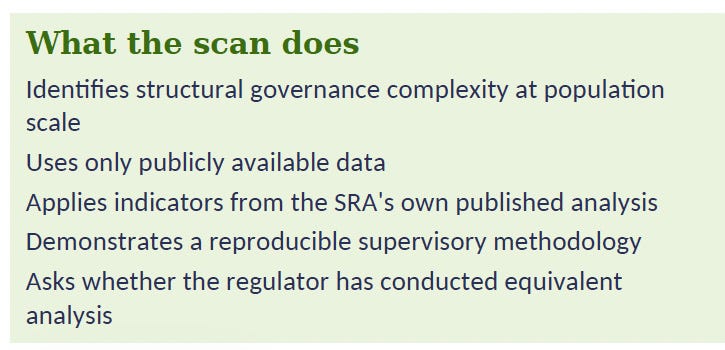
The charity put its concerns to the regulator in an open letter 17 May. It said:
We have analysed the SRA’s own published enforcement data for 2023/24 and identified a significant accountability gap at the earliest stage of the regulatory process.
The core finding is this: in 2023/24, the SRA received 11,852 reports about solicitors and closed 8,317 before any investigation began. Only approximately 510 led to a regulatory finding, a net finding rate of around 4.3%. Since 2017/18, the proportion of reports referred for investigation has fallen from around 53% to around 15%. The volume of incoming reports has barely changed.
These figures alone do not prove that the SRA is closing reports it should be investigating. The concern is narrower and more serious: the SRA does not publish enough data to allow the public, the profession, parliament, or the Legal Services Board to test whether assessment-stage closures are safe…
Recent failures at Axiom Ince, SSB Group, and PM Law demonstrate why this matters. Together, those matters involve more than £300 million in known or suspected client-money shortfalls, firm debts and consumer exposure.
The Solicitors Regulation Authority told me yesterday that it would be responding to the points raised by Blind Justice UK in due course. I shall update this piece online with its response..
Update 28 May: Blind Justice UK has now published its research:
The first question is whether complaints against the firms which have defaulted at such huge cost to clients and solicitors alike were amongst those which were weeded out at the initial stage.
The second whether the normal oversight of those firms flagged up any warning signs.
I’m sure more will occur to others.
I also do wonder if the SRA and LSB have fully reckoned with the risk posed by large firms. There seems to have been an assumption in the last 20 years that larger firms are an unmitigated good - less prone to regulatory failure, and more able to provide cheaper and better quality service to clients.
That may or may not be so, but it's clear that when they do fail, such large firms pose a far greater financial risk, for which the SRA has been totally unprepared, given the size of the compensation fund and the need for massive increases in individual and firm contributions.
It also seems unfair that the large increases in those contributions do not appear to be linked to firm size as periodic renewal fees are. Perhaps these should be based on the size of a firm's client balances?