
Courts without judges
Decisions on immigration law will be made by non-lawyers

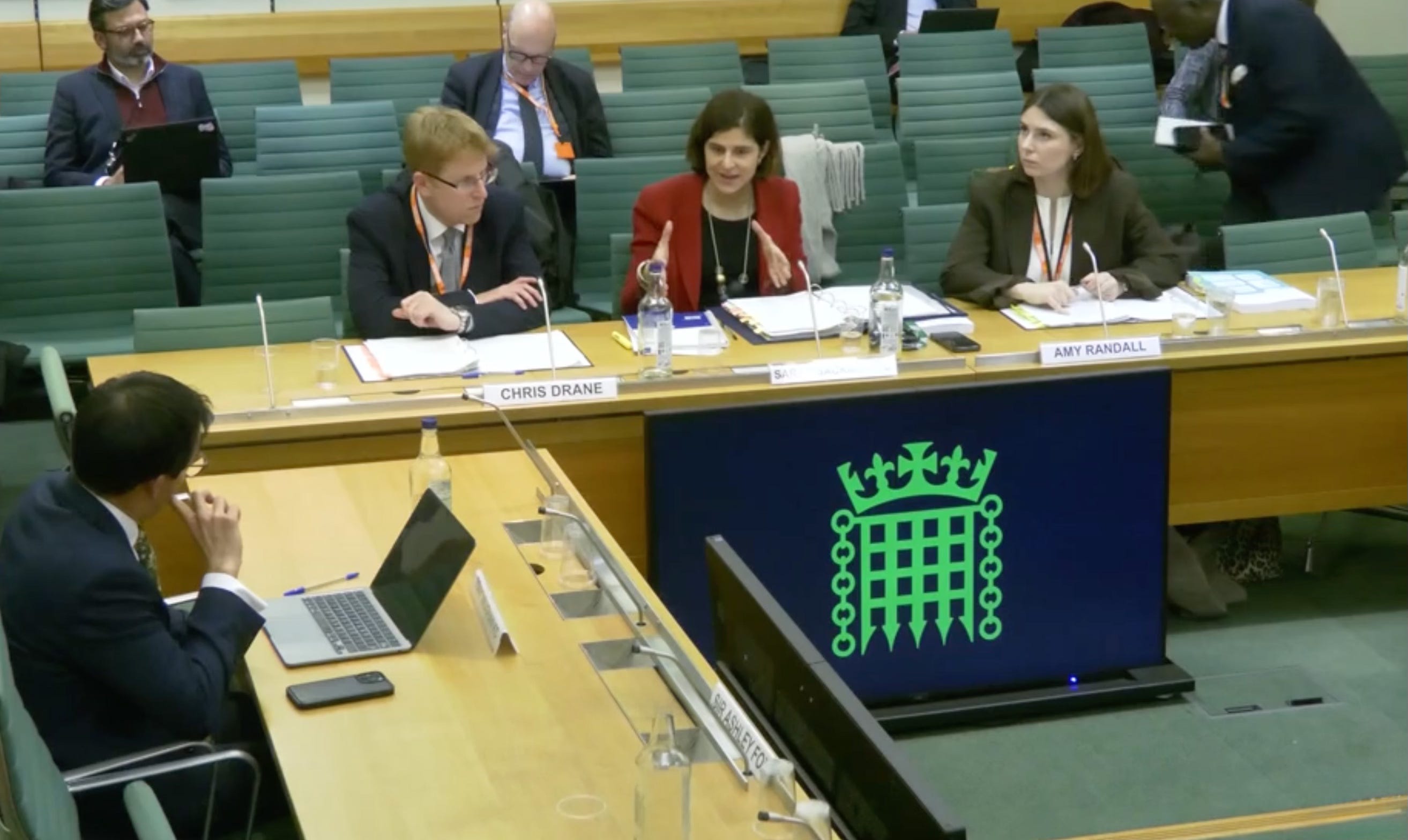
The courts minister Sarah Sackman gave a less-than-enthusiastic welcome to an announcement by the home secretary yesterday that immigration appeals will no longer be decided by legally-qualified judges.
Asked whether she was comfortable with the proposed new appeal body, Sackman said it was “an alternative model” but one that the Ministry of Justice stood ready to support.
The reform was announced on 17 November, with only 24 hours’ notice to the senior judiciary, leaving tribunal judges facing an uncertain future.
In a letter yesterday to the Commons justice committee, Shabana Mahmood disclosed more details about the adjudicators who will replace judges of the first-tier tribunal immigration and asylum chamber.
All members of the new independent appeals body will have the required training and decision-making expertise to make determinations on appeal cases and will possess a range of skills and experiences.
The widening of the recruitment pool in comparison to the current system will help us to recruit a greater number of adjudicators than there currently are judges in the first-tier tribunal immigration and asylum chamber, thereby boosting capacity to make decisions swiftly.
Comment
If Mahmood had wanted the new adjudicators to have legal qualifications, she would not have widened the recruitment pool to those who “possess a range of skills and experiences”.
At present, decisions are taken in the immigration and asylum chamber by legally-qualified judges, most of whom have previously practised as solicitors or barristers. It’s not clear how adjudicators with limited legal training will be able to decide points of law in an area governed by notoriously convoluted legislation.
Mahmood said that “appellants will retain the full right of onward appeal to the Upper Tribunal on points of law, as is the case today”. But that merely reinforces the point that adjudicators without legal training will be making legal findings.
Click the ► symbol to watch Sackman responding to questions about the reforms from Andy Slaughter MP, the committee chair.
In her detailed letter, Mahmood said — somewhat obscurely — that the appeals body would be designed “with the end-to-end immigration system borne in mind”. Legislation to set up the body is expected later this year.
Years ago I remember during one of many longueurs at court having a conversation with the son of my client, who turned out to work for the DoJ “modelling” different sorts of courts and tribunals. He happened to be working on one for the county court at the time which proposed replacing district judges with panels of non lawyer assessors.
It emerged during our conversation that in the course of developing this model he had had no idea of the role of county court district judges beyond the obvious one of hearing civil cases nor had he ever observed one in action. My instructing solicitor who happened to be a deputy DJ sat there opened mouthed whilst I gently suggested that he might think it a good idea to go and watch at least one DJ at work before he went very much further.
Possibly I flattered myself in thinking that our reactions to his description of his model led to its sinking without trace. However one gets a distinct whiff of it here so perhaps rather than being abandoned altogether it was simply left mouldering in a cupboard only to be dragged out again many years later, dusted down, and re-invented in the Immigration Tribunals.
Thin end of the wedge. How long before all the other qualified lawyer roles, such as traffic adjudicators, become ‘downgraded’?