
CPS in the dock
It’s not just reporters who misreport trials

The Court of Appeal is considering what further steps, if any, may be necessary after the Crown Prosecution Service published a press release on the Fordingbridge rape case containing “very significant errors” and then left them uncorrected for nearly three weeks.
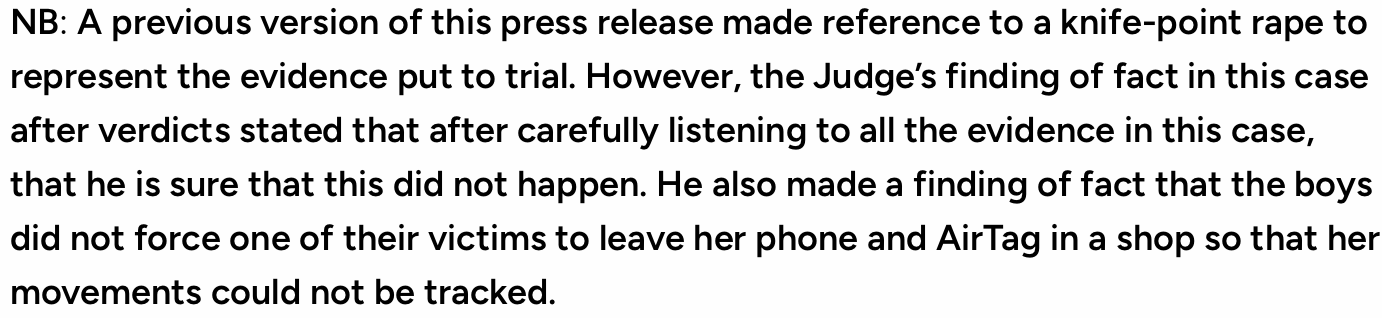
Here are two separate paragraphs from the CPS press release issued on 21 May:


And this is from the version issued on 10 June:
The CPS has been asked to provide the Court of Appeal and the attorney general with a full written letter of explanation, the lady chief justice Baroness Carr said on Thursday.
“We await that,” the judges continued:
Upon receipt, we will consider what further steps, if any, may be necessary. Our concern is not confined to the press release, its inaccuracy and the delay in correction, but is also about the failure on the part of those with statutory responsibility for the prosecution of these cases and for these references [to the Court of Appeal] to correct the immediate widespread misreporting of important factual aspects.
How could the CPS have got this so wrong? Simple: its press release was based on what prosecutors had argued during the trial and nobody checked it against the judge’s findings.
But there is no suggestion that this was deliberate. As the director of public prosecutions said when confronted by MPs with another failure last Tuesday:
I am afraid that, just drawing on many years of experience in criminal law, it is invariably cock-up, not conspiracy.
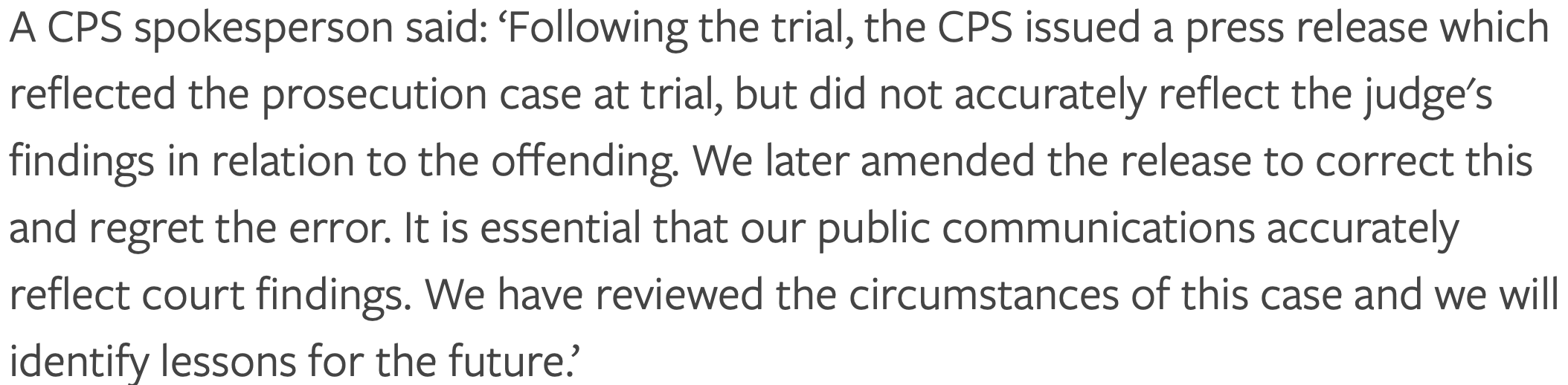
This is how Stephen Parkinson’s department explained the mistakes to the Law Society Gazette on Friday:
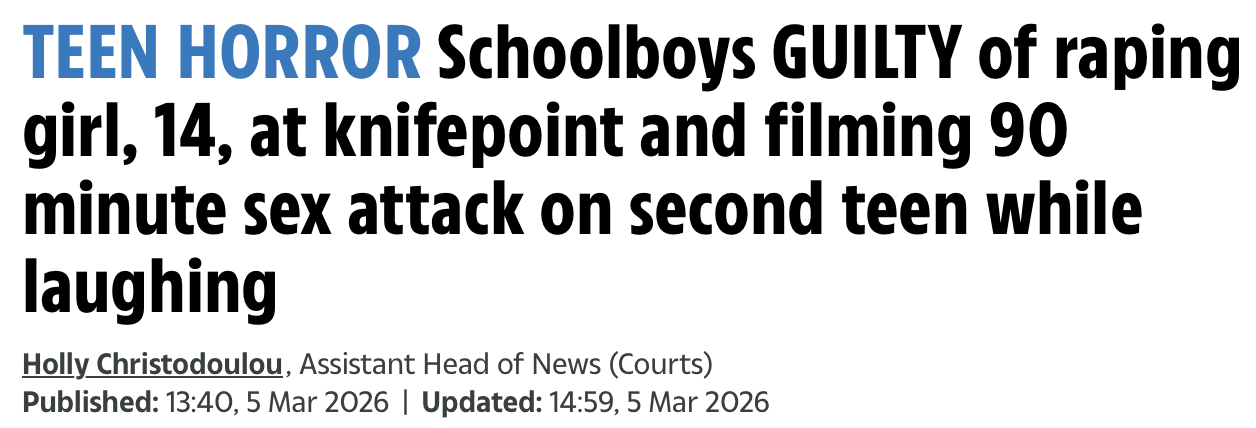
And that was part of a wider pattern. “There was a good deal of inaccurate reporting,” the Court of Appeal said last week. This “fuelled misinformed political and other public commentary”.
Here are some examples I spotted yesterday — though I’m not sure whether these were derived from the CPS press release:

The judge’s comment about “criminalising these children unnecessarily” — which also made it into the Guardian’s headline — should have sounded an alarm bell in newsrooms. Offenders are “criminalised” on conviction, regardless of sentence.
Did Judge Rowland really say that? He did indeed — but it took two weeks before we could be sure what he meant.
“Not all media outlets now rely on their own skilled and specialised court reporters who can provide accurate and well-informed reports of legal proceedings,” the Court of Appeal said on Thursday with what seemed like either wishful thinking or heavy irony.
In this case, the appeal court explained, Rowland “was unable to publish his sentencing remarks in full at the time when he passed sentence”.
And why not? We are not told. But we know the judge failed to prepare a full written text of his sentencing remarks and issue them to reporters, in line with best practice. Instead, he spoke from notes. But even these remarks were poorly covered. One reason, I’m told, is that journalists left court to report the outcome once the judge had explained his sentences to the convicted defendants in simple English. On deadline, reporters could not stay behind for Rowland’s formal ruling.
A transcript was ordered for the Court of Appeal. But the week after the trial was a judicial vacation and it was not until 4 June that the transcript could be anonymised and approved for publication.
It’s clear from the context of Rowland’s remarks that he was reminding himself — or, more accurately, telling others — of the sentencing guidelines he was following:
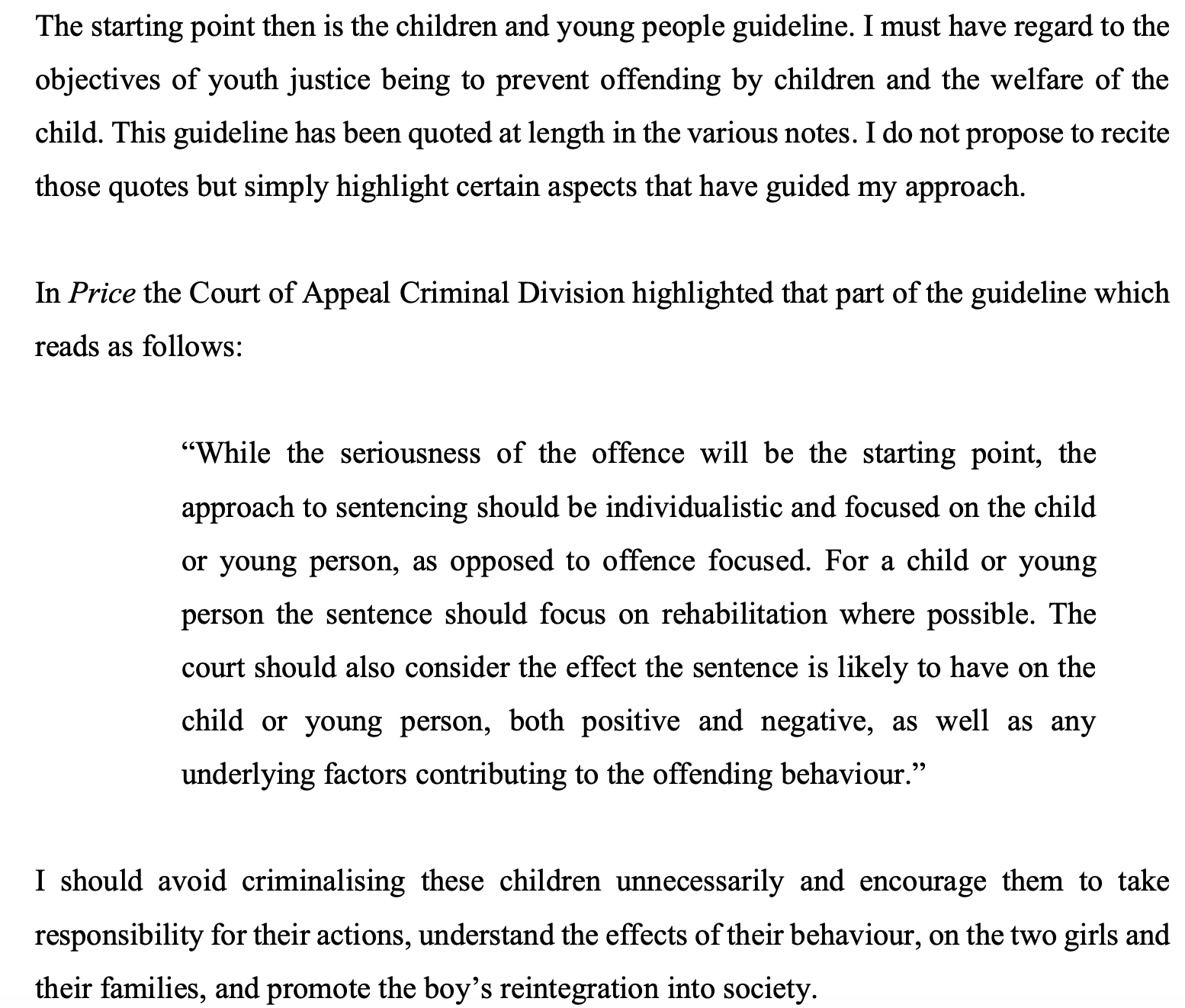
We can be sure that Rowland would have explained the guidelines more clearly if he had prepared a note for publication. And why didn’t he? Possibly because he did not want to delay sentencing. Perhaps because he did not foresee the reaction to the sentences he was about to pass.
But we now know that the judge’s sentencing remarks were available to the parties at the time. So Lord Hermer KC, the attorney general, was aware of the judge’s reasoning when he announced two working days after sentencing that he was making a reference to the Court of Appeal:
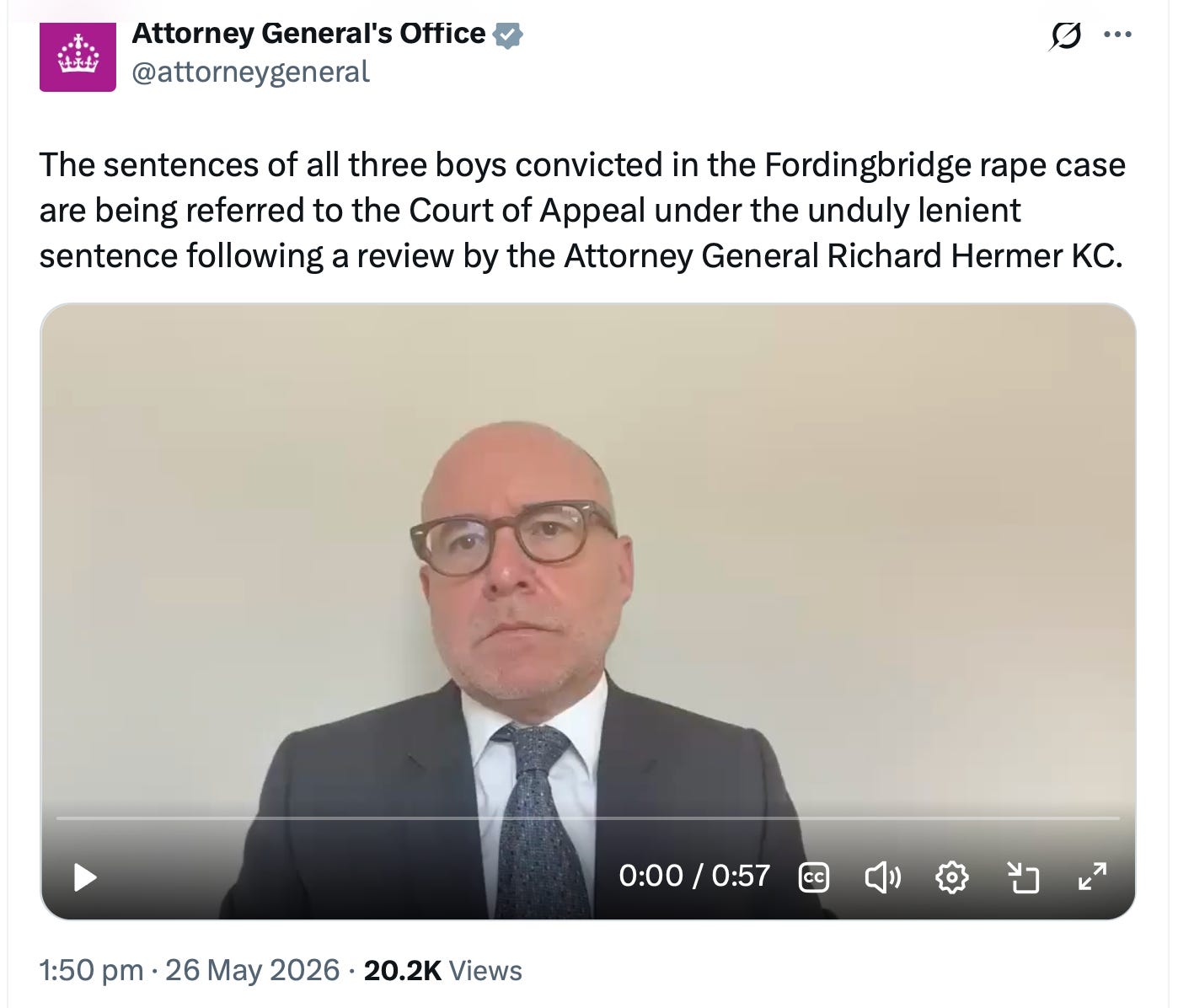
Issuing a video statement was an unusual move: lenient sentence cases are normally dealt with in a more low-key fashion by the attorney’s deputy, the solicitor general.
Last Thursday, two of the teenage boys were given sentences of detention — not “prison”. The Court of Appeal dismissed Hermer’s argument that the third offender had been given an unduly lenient sentence.
The attorney general, for one, had acted properly, the lady chief justice said.
She added:
We doubt whether any part of that decision-making process is assisted by it becoming a matter of political debate in and beyond the House of Commons.
It is not suggested that judges’ decisions are immune from wider criticism and scrutiny. But the independence of the judiciary, and the security of individual judges, requires that parliament refrains from criticising individual judges.
MPs had plenty to say in the immediate aftermath. "This is an appalling case and it is right that law officers are urgently reviewing the sentences,” the prime minister commented.
Others went further and said Rowland should face consequences. “If a judge has made a very bad error, which I think has happened in this case, they should be accountable for it," the Reform UK MP Robert Jenrick told the BBC.
False reporting did not affect the Court of Appeal’s sentencing review, Carr explained, “because this court would not be influenced by such misinformation”.
Those affected were the teenage offenders, against whom public feeling had been further inflamed, and the second victim, whose evidence had since been examined under the full glare of publicity. This may have obscured the fact that on the main issue — whether or not she was raped — the jury believed her.
Blimey. I left a comment here at the time having read the CPS release without doubting its veracity for a moment. You kindly replied with what I thought was a slightly sphinx-like comment. Now I see why. The judge should have been more savvy, but the CPS release and AG’s video statement really do seem to have done harm.
I have been concerned about CPS media releases for some time. What has troubled me has been the triumphal undertone of the statements, and the fact that acquittals are not similarly reported, to show balance, and to teach the public how the criminal justice system works. Too often the CPS spokespersons have forgotten that the prosecutor's constitutional role is as a *minister of justice* who never wins or loses a case; instead the role of the CPS is to ensure that justice is done. And justice means acquittals or NFA as well as convictions. This is being lost sight of in the era of Operation Soteria.