
DPP supports reforms
But people who know juries best remain unconvinced

The director of public prosecutions has expressed his support for two of the proposed reforms that have emerged from Sir Brian Leveson’s review of the criminal courts. But Stephen Parkinson, who heads the Crown Prosecution Service, was more guarded about government proposals to limit the right to trial by jury.
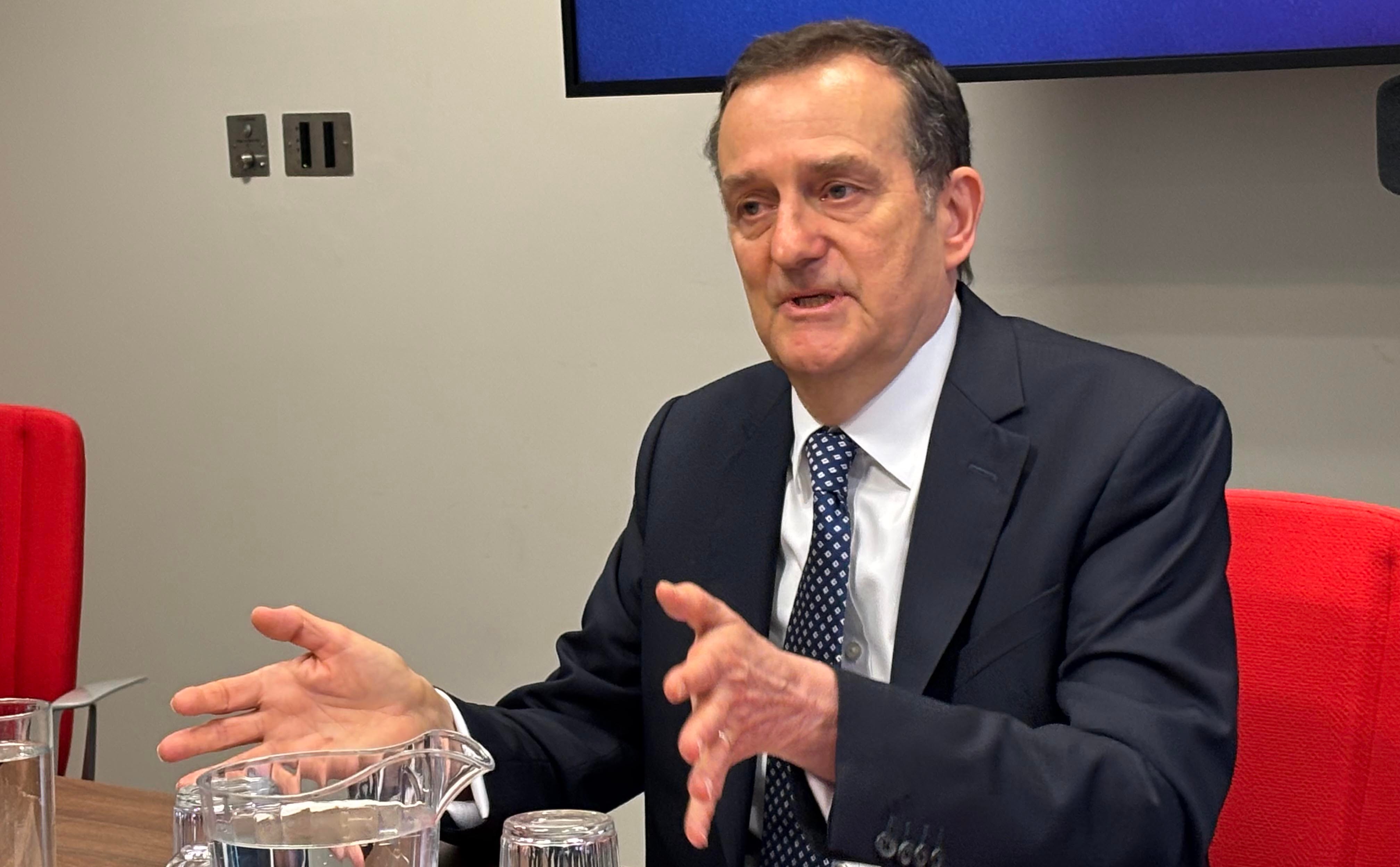
Speaking to reporters yesterday, Parkinson said he agreed with Leveson’s recommendation last July about the incentives that should be offered to defendants who admit their guilt at an early stage.
At present, the maximum reduction in sentence for a guilty plea at the earliest possible opportunity is 33%. The former senior judge advised ministers that this should be increased to 40%. A reduction of 33% should still be available, he proposed, for an admission of guilt at the subsequent plea and trial preparation hearing.
Agreeing with this recommendation, Parkinson said that 64% of cases are not tried on the day their trial was scheduled to take place because the defendant enters a guilty plea at the last possible moment:
There are several reasons why guilty people may not plead guilty at first. Sometimes they ask for more information. Sometimes they can’t face up to their guilt at first. But those of us who prosecute and defend daily in the courts know that a very significant number of defendants who are in fact guilty choose not to plead guilty because for them it is a one-way bet.
First of all, they stay free. The average time that people wait for a trial in the crown court has gone up by 70% since 2019. For rape cases it is now a year, and often more in some parts of the country. Some trials are being listed for 2030.
Secondly, if they are held on remand awaiting trial they get extra privileges.
But most important of all, from their perspective the case may collapse. Guilty defendants know delays often mean victims withdraw.
The director of public prosecutions also supported the government’s proposal that magistrates should be allowed to pass prison sentences of at least 18 months.
He said:
The great majority of cases currently in the crown court could have been dealt with by magistrates. 45% of people sentenced in the crown court are not given a custodial sentence, and of those who are given a custodial sentence over a third get 12 months or less. All of these cases could have been dealt with by magistrates.
Increasing magistrates’ powers will give them greater confidence to keep those cases, which will then be dealt with more quickly. This is a significant proposal which could make a big difference.
But Parkinson was unwilling to be drawn on Leveson’s jury recommendations. “Ultimately it is for parliament to decide where the balance should lie between cases tried by jury and cases tried by alternative means,” he said. “But I will always support any proposals which will improve the delivery of swift justice and that is the clear intention behind these proposals.”
Comment
Parkinson is the first public servant — apart from victims’ representatives — to support any of the structural reforms recommended by Leveson or subsequently proposed by ministers.1 But his concern that defendants are playing the system by not admitting their guilt until the last possible moment is widely shared.
The issue was raised on Tuesday by Mark Fenhalls KC, a former chair of the Bar Council and of the Criminal Bar Association, during a lively panel discussion at Gray’s Inn. Aimed particularly at student barristers, it considered the future of the criminal bar in the light of Leveson’s proposals. Others taking part were the former Old Bailey judge Wendy Joseph KC — now a successful author — and the leading jury expert Professor Cheryl Thomas KC (hon). You may recognise the moderator.
I’m publishing the recording here as a response to my interview last week with Sir Brian Leveson for A Lawyer Talks. Just click the the ► symbol to watch.
Update: see my correction in the comments below.
Thanks, Joshua. The sliding scale of reduction of credit for guilty pleas came into being relatively recently. When I started practice in 1980 judges had the power, later removed by statute, to say (even on trial day) that full credit (one third) would still be given if the defendant was to plead guilty. That judicial discretion cracked a good many trials. The sliding scale has had the unintended consequence of reducing the incentive for the guilty to plead guilty. Why 'do the right thing' when you will only get a 10 per cent reduction for a late plea and may be acquitted completely after a trial?
Incidentally, I am not sure defendants 'know' that a long delay means 'victims' (the DPP's choice of words) are more likely to withdraw. I never heard a defendant once make that suggestion. They were far more likely to hint at the hope some kind of improper pressure would result in a retraction, though that hope rarely, if ever, came to fruition!
Hello Joshua, just to say that Stephen Parkinson isn't the first public servant to support the structural reforms proposed. When the Lord Chancellor announced his proposals Anthony Rogers, HM Chief Inspector of the CPS said "Today, I welcome the radical reforms announced by the Justice Secretary. Removing the right of the defendant to elect, increasing the magistrates’ court powers of sentence, the creation of the Crown Court Bench Division will improve judicial control and improve efficiency. The majority of cases that had jury trials will still be jury cases, and these reforms will not take away the fundamental rights that we hear some mistakenly cry. " His post/comments can be found on LinkedIn. Best wishes David