
Jury’s out
Make-or-break day for the government’s reforms

Today is make-or-break day for the government’s planned jury reforms. If enough MPs vote to give David Lammy’s courts and tribunals bill a second reading (and then approve the inevitable timetable motion), subsequent opposition in the Commons and then in the Lords may be containable. But if more Labour MPs vote against the bill than expected, ministers may be forced to make difficult concessions at a later stage.
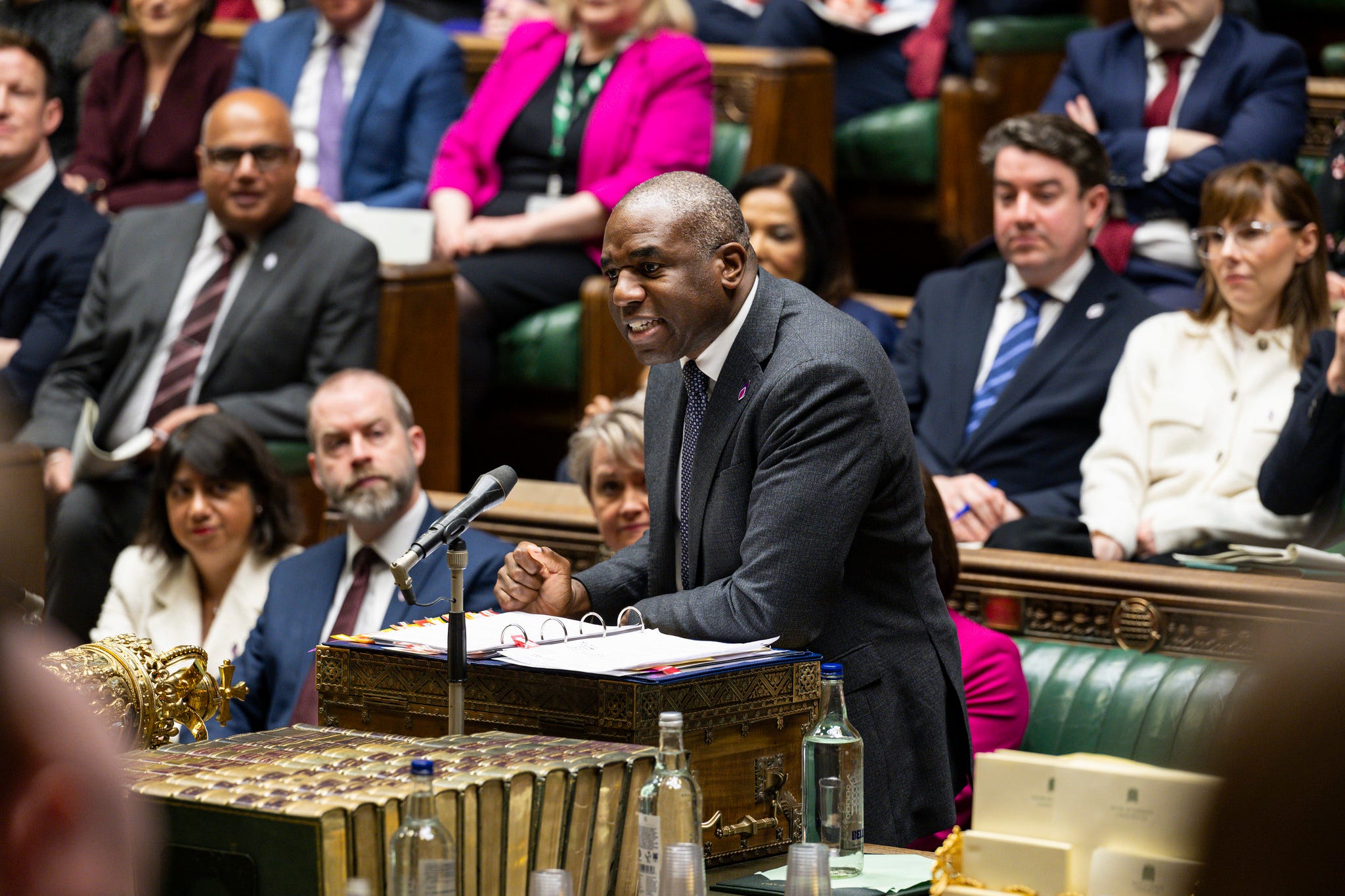
The Times reports that about 30 Labour MPs are expected to vote against the bill this evening, while a further 20 are expected to abstain. Others may vote against clauses dealing with jury trials when the bill returns from committee scrutiny for its report stage.
In the Telegraph, David Lammy writes that dropping his reforms would mean “tens of thousands more lives left hanging in the balance, and criminals walking free as the system struggles to keep up”.
The justice secretary tells readers his bill “will create a new Swift Bench Division of the Crown Court, where judges will hear certain mid-level cases alone”. In fact, there is no mention in the bill of “swift” courts or a “bench division” — because the bill’s concept is of a single crown court that may sit with or without a jury as required by the legislation.
What the bill does
I published a clause-by-clause analysis of the bill’s proposals a week ago, with detailed comments from the Criminal Bar Association. In summary, though:
If an offence is triable only on indictment, it must be conducted with a jury.
However, a judge may allow some complex or lengthy cases to be tried without a jury if certain conditions are met.
A defendant will no longer have the right to elect trial in the crown court on charges that may currently be tried either in the magistrates’ court or by a judge and jury.
Even if magistrates decide that a case should be tried in the crown court, it will be heard without a jury unless the court considers that the defendant is likely to receive a sentence of more than three years on conviction.
The two sides
On one side of the argument are the criminal lawyers, including — I suspect — many serving judges.
Reports this morning by the Independent and BBC News say that that more than 3,200 lawyers — including 22 retired judges, 2,000 barristers, 300 King’s Counsel and a handful of television personalities — have signed an open letter calling on Lammy to drop his proposals. (Update 0800: the letter is published here).
Yesterday, seven retired judges, mostly former senior circuit judges specialising in crime, joined past and present leaders of the criminal bar to argue that the proposed changes would be unworkable in practice.
“The evidence that they will significantly affect the backlog of cases is too thin to support the policy,” the lawyers wrote in a letter to The Times.
They said:
The government wants to rush the courts and tribunals bill through parliament, despite it not having been in Labour’s manifesto and despite inadequate impact assessments. If magistrates are allowed to pass two-year sentences to take more trials from the crown court, their existing record backlog of cases will simply grow.
On the other side of the argument are those who work to support victims of crime. Claire Waxman OBE, victims’ commissioner for England and Wales, published an open letter to MPs yesterday.
It said:
I have asked countless victims stuck in our court system a simple question: faced with waiting years for a jury trial, would they prefer to wait for a jury or accept a judge if it meant swift justice? Those enduring the longest waits have been clear — they would sacrifice the wait for a jury if it meant timely justice.
But they also stress important safeguards: tackling the lack of diversity on the bench, and ensuring judges are robustly trained in the dynamics of abuse and trauma.
Of course, parliament must debate and scrutinise these proposals carefully. But here is the reality: if we debate endlessly and fail to implement urgent solutions that reduce waiting times, victims will simply stop engaging with the justice system altogether.
They cannot endure years of uncertainty and re-traumatisation. Fewer will come forward. More cases will collapse. Offenders will act with increasing impunity and public safety will suffer.
Analysis
I have seen no evidence that the government intends to “rush” these measures through parliament.
When Sir Brian Leveson was appointed to review the criminal justice system in December 2024, it was made clear by ministers that limiting the right to jury trial was firmly on the agenda. His recommendations in July 2025 came as no surprise.
Six months passed before the government confirmed that the bill would be going ahead. Ministers have said it is not expected to become law until the end of this year.
It will then take the Ministry of Justice the whole of next year to prepare for the legislation to be implemented. That means judge-alone trials for some cases currently decided by juries will not be introduced until 2028. In the meantime, the waiting list for crown court trials will rise from its present level of 80,000 to an estimated 100,000.
It’s true, as the Times letter asserts, that the bill allows for magistrates to pass sentences of up to two years. But it also allows ministers to limit the maximum sentence in the magistrates’ court to six months. Neither extreme is likely: if the maximum is increased from its present level of one year, ministers are not likely to go beyond 18 months until the prison population has been much reduced.
Victims’ representatives are not the only people who want to reduce waiting times in the crown court, of course. The barristers believe this can be achieved by the lifting existing financial restrictions on the number of days that the courts can sit each year and introducing efficiency savings recommended by Leveson.
The government has accepted both those solutions but argues that they will not bring the backlog down without fewer jury trials.
As I have explained, the planned structural reforms will not be introduced until 2028. If the court backlogs can be brought down to manageable levels during the next two years, it will not be too late to postpone or even abandon the bill’s main changes. But if the government is right to say that more sitting days and improved efficiency will not be enough on their own, victims of crime will at least have some hope of seeing justice.
I do not understand one aspect of the proposal to do away with the Jury. At present, following a summing up, the jury retires to consider a Yes/No answer to guilt, without reasons. If the summing up is (as it almost always is) unimpeachable, that is the end if the matter. While waiting for the verdict, the Judge deals with other cases in Court.
How can it be more efficient to require a verdict with a reasoned judgment from the Judge which will be time consuming and difficult to produce?
And it is never an easy or formulaic exercise to produce a Judgment, whereas an experienced Judge can produce a competent summing up in a mid level case with relative ease.
How will the complainants in a criminal case like it to have the judge's reasons for not believing their evidence painstakingly explained - unlike the situation in a Jury trial? How will the Court's relationship with the local police service be sustained following a series of verdicts in which their work is subject to detailed criticism of their competence or credibility?
These proposals threaten collateral damage to the whole system and, in my view, do not begin to address the real problem of backlog and are unlikely to cure it. A major cause of the trouble is, i think, the Treasury driven cap on Judge's sitting hours which has prevented the recruitment of enough Judges and inhibited the full use of Recorders and other part time Judges. That there are people to staff them but Courts are left unused while this crisis has evolved is a scandal to be laid at the door of Government NOT the Jury system.
It is welcome news that, at least temporarily, that cap is being removed. Let us see how that works before taking a wrecking ball to a system that is trusted and practical,
Like most Bills presented to Parliament, I do not expect this 'Bill' to become an Act of Parliament in the Bill's present form.